



7–10 days · Private · Northern Tanzania
The Solo Safari
A private safari that was not designed for two people and adapted.
Tanzania for one — your own vehicle and guide, a route answerable to nobody else’s interests, and a straight conversation about what travelling alone actually costs.
Length
7 to 10 days
Vehicle
Yours alone
Route
Answerable to nobody else
Pricing
Not the two-sharing band
Keep this route
The thinking
Solo travellers are usually sold somebody else’s itinerary
Almost every safari product is designed for two people sharing and then adjusted. The adjustment is normally a supplement, a shared vehicle with strangers, or a group departure with a fixed route, and none of those are what an independent traveller with money actually wants.
A private journey is the natural solution and nobody sells it that way. Alone, in your own vehicle, the route is genuinely yours: you can spend three hours at one sighting, skip the crater entirely, change the plan at breakfast, or spend a whole morning in camp reading.
What replaces the company of a travelling companion is the guide, which is why the match matters more here than anywhere else. Get that right and this is the best version of a safari there is.
Best for
- Independent travellers who have stopped waiting for other people to be free
- Photographers and writers, for whom a second person is often a compromise
- Anyone marking something — a birthday, a change, an ending
- Travellers who want the freedom of solo travel without the exposure of a group tour
Not for
- Travellers looking for a social group journey — this is deliberately not that
- Anyone whose main objective is the lowest possible cost; a private solo journey is not it
- Guests who would find several days of their own company difficult
Straight answer
On cost, plainly: the published bands assume two people sharing.
Every rate on this site is per person per day with two sharing, and a solo journey is not priced from them. One person carries a vehicle, a guide and a room that would otherwise be shared, and most camps charge a single supplement on top.
It is more expensive per person than the same route for a couple, and any operator implying otherwise is going to have an uncomfortable conversation with you later. Your planner will give you the real number for your dates before anything is held, and will tell you where a camp’s supplement is worth avoiding and where a different week removes it.
What you get for it is a journey nobody else has a say in, which is a real thing and worth being clear-eyed about rather than apologetic for.
Day by day
Seven to ten days, entirely yours
Days 1–2
Arrival, and the shape of it
In, and out to the bush the same day if the flight allows. The first evening with your guide is mostly a conversation about what you actually want from the week, because unlike every other journey we run this one can be rebuilt around one person’s answer.
Signature momentBeing asked what you want and finding it is not a rhetorical question.
Days 3–4
Elephant country, at your speed
River and baobab country, and the first proper demonstration of what a private vehicle means when there is one of you in it: no compromise about how long to stay, when to eat, or whether to go back to the same place tomorrow because it was good.
Signature momentStaying at a sighting long after anyone else would have wanted to leave.
Days 5–6
The highlands
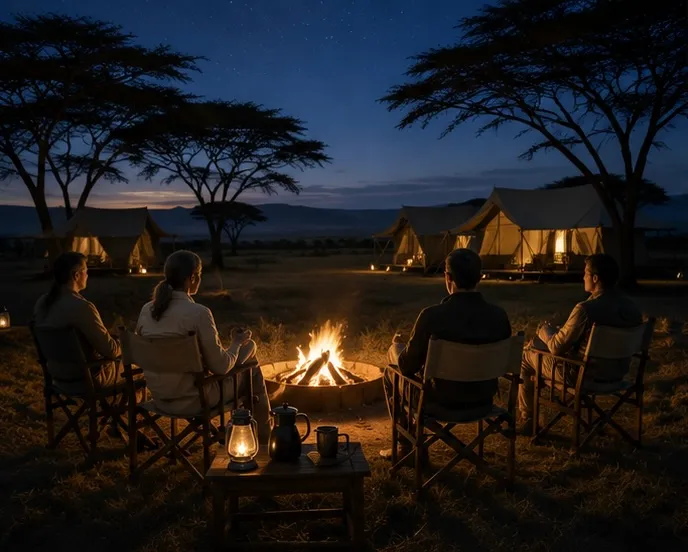
Up to the crater rim and down onto the floor, on the morning you choose rather than the one the schedule assigns. Camps up here are small and have fires, which is the version of evening company that suits most solo travellers — available, not compulsory.
Signature momentA fire, a drink, and a conversation you can leave whenever you like.
Days 7–10
The Serengeti, unstructured
Onto the plains for the rest of it, in one camp. Long days out, or a morning in camp with a book while the guide checks where the herds have moved. The point of these last days is that nothing is fixed and nobody is waiting for you.
Signature momentA whole day arranged around one thing you wanted to see properly.
Seven days is a complete journey; ten lets the last camp become a stay rather than a stop. Camps are chosen partly for whether dinner is sociable, which matters considerably more travelling alone than it does otherwise. Single supplements vary by property and by season, and your planner will be specific.
Tanzania, on the routes we run.
Included
- Private vehicle and Highland guide throughout, never shared
- Park and conservation fees for the areas on the route
- Accommodation and meals on the basis set out in your written itinerary
- Internal flights or transfers on the route
- A named planner before you travel and in-country support during it
Not included
- International flights
- Tanzanian visa and any entry requirements
- Travel and medical insurance, which we require
- Single supplements, which are quoted openly in your written proposal
- Personal spending and gratuities
Nothing compulsory gets added later. If a cost appears after quoting, it is because you asked for it.
In the design
What the journey is built around
- Your own vehicle and guide, never shared with another party
- A guide matched to you specifically, which on this journey is the main event
- Camps chosen for whether eating alone is comfortable and eating with people is possible
- A route rebuilt during the week rather than fixed at booking
- Accommodation and meals on the basis set out in your written itinerary
Subject to season and to how you want the journey paced — your written itinerary is the version that counts.
Why this shape
Because the alternative on offer is a group tour
Independent travellers with the means to do this properly are usually offered two things: a shared vehicle or a supplement on a product designed for couples. Both treat travelling alone as a problem to be priced rather than a way to travel.
It is more expensive per person and we say so on the page. In exchange you get the only version of a safari where the route belongs entirely to one person, which is a thing a great many people would pay for if anybody offered it to them straight.
Questions
Before you ask us
- How much more does it cost travelling alone?
- More per person than the same route for a couple, because one person carries a vehicle, a guide and a room, and most camps charge a single supplement. The published bands on this site assume two sharing. Your planner will give you the real figure for your dates before anything is held.
- Will I be on my own the whole time?
- You will have your guide for most of the day, and the camps we choose have a fire and a shared table for the evenings if you want them. Both are optional, which is the design.
- Is it safe to travel alone in Tanzania?
- Yes, with the ordinary caution of any long-haul travel. You are with a Highland guide throughout, in our own vehicle, with a named planner before you travel and a duty phone answered in Moshi while you are here.
- Can I join a group instead?
- We do not run group departures. If a shared journey is what you want, we will tell you honestly that another operator is the better fit rather than build you a bad version of it.
- Can I change the plan while I am there?
- That is the main reason to book this rather than anything else. Alone, in your own vehicle, the route can change at breakfast — and this itinerary is deliberately left loose so it can.
The difference
What that actually means in practice
- Not a group departure
- No fixed dates, no strangers in the vehicle, no route agreed by committee. The most common solo safari product is a shared trip; this is the opposite of it.
- The guide match is the product
- Alone, you spend more hours with your guide than with anybody else. We match for temperament and interests as deliberately as for park knowledge, and we would rather move dates than send the wrong person.
- The cost conversation happens first
- Single supplements and the real solo rate are put in front of you before you commit, not discovered in the final invoice.
- Camps chosen for the evening as well as the day
- A big lodge is the loneliest place to be alone. Small camps with a fire and a shared table let you take company or leave it, which is the thing solo travellers actually want.
Design decisions
How we built this journey
- Small camps over grand ones
- The evening is the part of solo travel that goes wrong. Eight tents and a fire solves it; a hundred rooms and a formal dining room does not.
- The route left deliberately loose
- A single traveller is the only party that can genuinely change plan at breakfast. Fixing the itinerary would waste the one structural advantage of travelling alone.
- Seven days minimum, not four
- The first days are travel. The freedom this journey is built on only really starts once you have stopped arriving.
The standards behind it
What protects the experience
Where you stay
Small camps with a sociable centre, where dinner can be shared if you want it and taken alone if you do not. A large lodge is the loneliest place to travel by yourself, and a camp with eight tents and a fire is the opposite.
We do not publish a property list, because the right camp depends on your month, your route and your party. Your written proposal names the camps we recommend, the room category and why each was chosen — how we choose them.
Guided by Tanzania knowledge
This is the whole journey. Alone, you spend more hours with your guide than with anyone else, so the match matters more here than on any other trip we run — someone whose company you actually want, who reads when you would rather not talk, and who is not performing hospitality at you.
We match a guide to the journey rather than assign one to the booking — the Highland guiding standard.
On safari
- Your own vehicle and guide, never shared with another party
- Responsible viewing distances, and a guide who will refuse a closer approach
- Guides experienced in the specific parks on your route, in the season you travel
- Emergency procedures briefed before you travel, not improvised on the day
- A named planner before you go and a duty phone answered in Moshi while you are away
Investment
What this journey usually costs, and why it moves
Private Reserve · $9,000–$16,000+ per guest
Greater privacy, strategic aviation, stronger camp positions and specialist experiences where they materially improve the journey.
- Travel month
- Migration periods, festive dates and the northern high season carry stronger demand. Shoulder and green seasons can materially reduce the price.
- Accommodation
- The largest single lever. Property, room category, meal and drink basis all change the real operating cost.
- Route and pace
- More nights in fewer places may improve the journey; remote regions cost more to reach and supply.
- Domestic aviation
- Scheduled flights and charters can buy back whole days. They are included only where the product page and confirmed proposal say so.
- Party and rooming
- Vehicle, guide and fixed logistics are divided across the party. Solo travel, single rooms, family rooms and exclusive use change the per-person figure.
- Special experiences
- Balloon flights, private dining, specialist vehicles, walking, boating and marine days are costed when they are genuinely part of the design.
A journey-level planning band, not a quote. The written proposal carries the real number for your dates, rooming, camps, fees, aviation and included experiences.
Yours, not ours
How this changes for you
- Photography-weighted, with the route built around light rather than around parks
- Extended with a coastal week, where solo travel is easy and the camps are sociable
- Combined with a Kilimanjaro climb, which many solo travellers pair it with
- Built around a specific interest — birds, walking, culture — since there is nobody to compromise with
Where this journey goes
Read about the places first
- Tarangire National ParkBaobab country with a river through it — the elephant park of the northern circuit, and the one most itineraries give too little time to.
- The Ngorongoro CraterA collapsed volcano holding a self-contained ecosystem on its floor — the densest concentration of large mammals in Tanzania, and the busiest.
- The SerengetiThe plains that most people mean when they say safari — and a park large enough that where you stay in it matters more than whether you go.
Related journeys
If this one is not quite it
Design your Tanzania journey
Tell us what you imagine — the month, who is travelling and the kind of Tanzania you have in mind. Our planners shape the route, the pace and the experiences around you, and a costed day-by-day plan with named camps comes back within 48 hours.
Begin your private journeySpeak with a Tanzania specialist