



Northern Tanzania
The Serengeti
The plains that most people mean when they say safari — and a park large enough that where you stay in it matters more than whether you go.
What it is
The Serengeti in plain terms
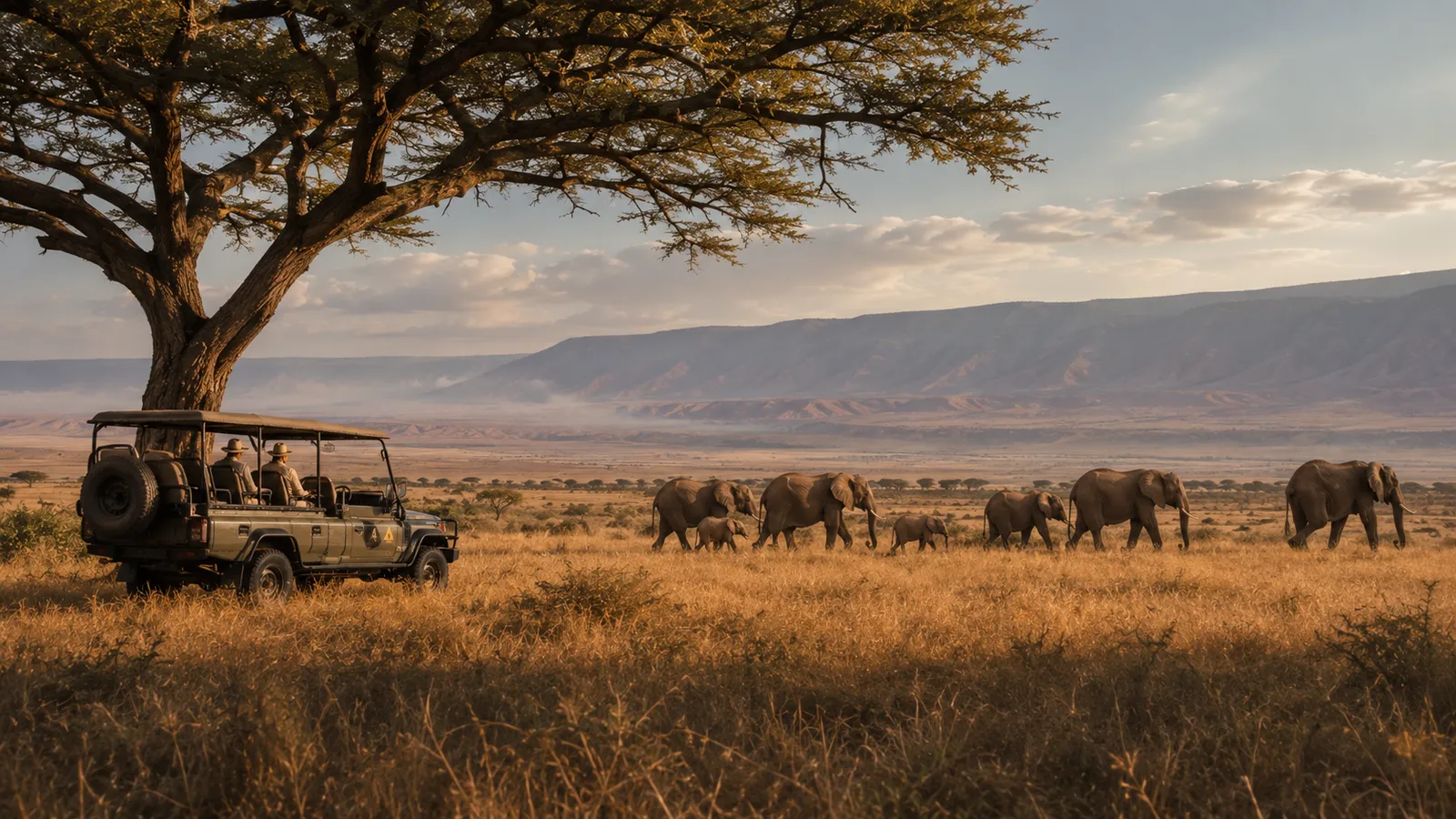
The Serengeti is a vast grassland ecosystem in northern Tanzania, running from the Ngorongoro highlands in the south-east up to the Kenyan border, where it continues as the Maasai Mara. Its name comes from the Maa word for extended place, which is the most accurate description anybody has managed.
It is the most famous safari destination in Africa and it is also frequently misunderstood. Visitors arrive expecting one place and find a region — one that takes hours to cross, behaves completely differently from one month to the next, and rewards being in the right part of it far more than it rewards simply being there.
The single decision that shapes a Serengeti safari is not which park. It is which part of the Serengeti, in which month, and for how many nights.
Why come here
What Serengeti does that nowhere else does
- Predator density
- Open grassland is the hardest place in Africa to hide, which is why lion, cheetah and hyena are seen here more reliably than in thicker country. Leopard are in the riverine woodland along the watercourses rather than out on the plains.
- The migration lives here most of the year
- The herds are inside the Serengeti ecosystem for the great majority of the year and only cross into Kenya for part of it. Where they are in any given month is predictable in broad terms and never precise, which is why the month decides the route.
- Scale you cannot photograph
- The reason people describe the Serengeti in terms of horizon rather than in terms of animals is that the openness is the experience. It is also why a badly positioned camp costs you hours: distances here are real.
- It works as a first safari and a fifth
- Few places carry both. A first visitor gets everything they came for; a fifth-time visitor can go north for the crossings, south for the calving, or west into country that sees a fraction of the traffic.
When to go
The Serengeti has no bad month, only wrong expectations
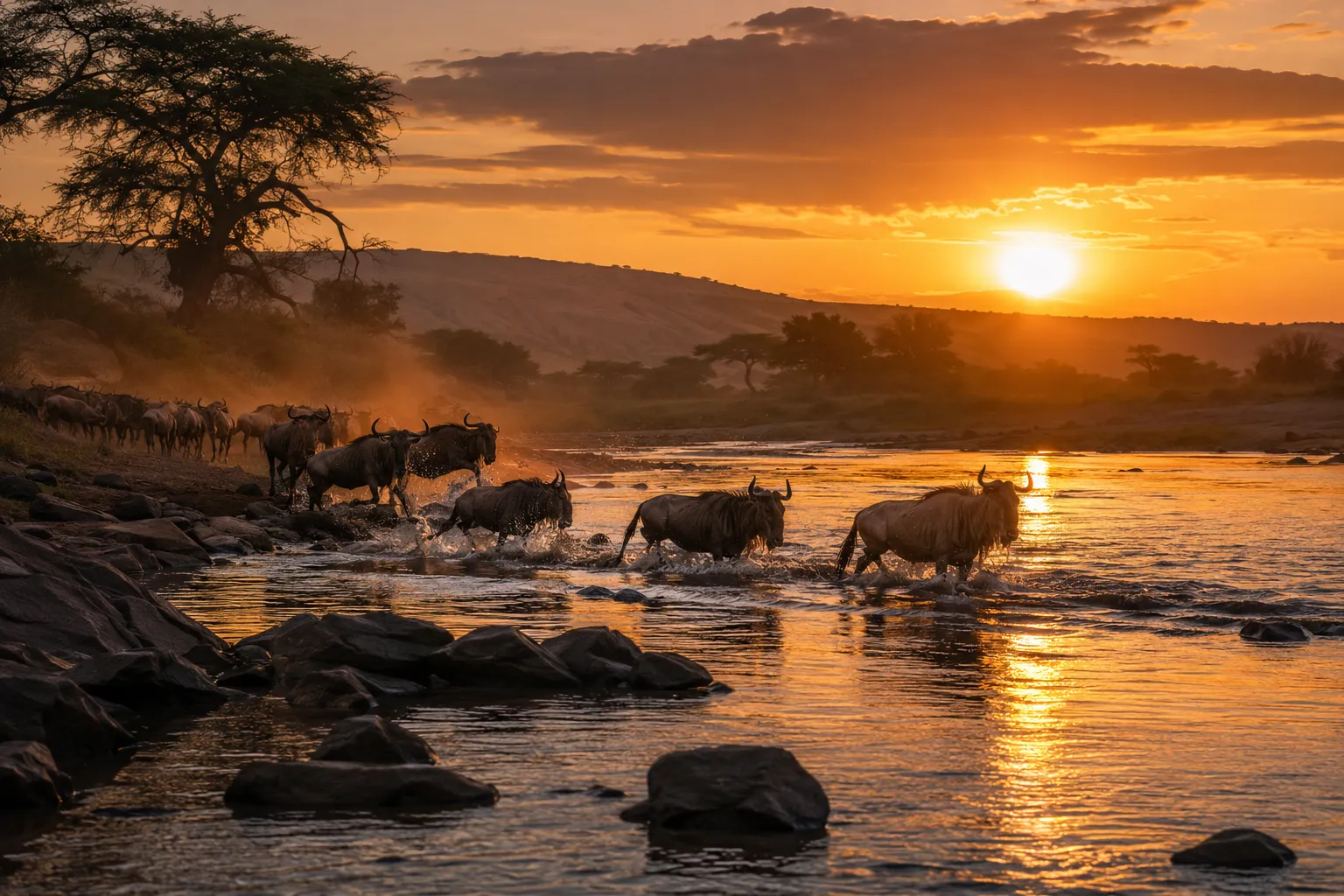
Broadly: the herds are on the southern short-grass plains around Ndutu in the early part of the year, which is when calving happens and when predator activity is at its most concentrated. They move west and north as the year goes on, reaching the northern Serengeti and the Mara River in the dry months, which is the river-crossing season everybody has seen photographs of.
The dry months give the most reliable wildlife viewing across the whole park and the highest number of vehicles. The green months give dramatic skies, far fewer people, and game that is more spread out and therefore harder won.
What we will not do is tell you the herds will be in a particular place on a particular date. Nobody controls that, and an operator who promises it is promising something that is not theirs to promise.
See what each month gives you across Tanzania →Wildlife
What you are likely to see
- Lion, in some of the highest densities anywhere on the continent
- Cheetah on the short-grass plains, which is the habitat they hunt best in
- Leopard along the rivers and in the kopje country, seen with more patience and more luck
- Elephant, buffalo, giraffe and a long list of plains game throughout
- Wildebeest and zebra in enormous numbers when the herds are in your part of the park
- Black rhino, which are present and are genuinely rare to see
Likely, never promised. These are wild animals in very large areas, and an operator who guarantees a species is guaranteeing something that is not theirs to give.
How long
How many nights the Serengeti needs
Three nights is the working minimum and it is tight. Four to five is where the park starts to give you something — enough to spend a whole morning with one sighting instead of collecting several. A week in one well-placed camp will show you more than a week split across three, because the packing mornings and the transfers come out of your game-viewing time rather than out of the calendar.
Getting here
- By air, into one of the park’s airstrips — the fastest option, and the one that makes the north practical on a shorter trip
- Overland from Arusha through the Ngorongoro highlands, which is a long day and a beautiful one
- Combined with Ngorongoro and Tarangire as the northern circuit, which is how most first visits are built
Be honest with yourself
Who Serengeti suits badly
- Travellers who want to avoid other vehicles entirely — for that the answer is the west or the south, and it costs more to reach
- Anyone with only two nights; the park is too large to reward a rushed visit
- Visitors expecting the herds to be wherever they happen to be standing, in any month
Journeys that go here
How we build Serengeti into a trip
Common questions
Serengeti, answered plainly
- When is the best time to visit the Serengeti?
- It depends entirely on what you want. The dry months give the most reliable general game viewing and the river crossings in the north; the early part of the year puts you with the calving herds on the southern plains; the green months give you the park with almost nobody in it. Tell your planner which of those matters most and you will get a straight answer rather than a brochure month.
- How many days do I need in the Serengeti?
- Three nights minimum, four or five to do it properly. Fewer than three and a disproportionate amount of your time goes on getting in and out.
- Is the Serengeti better than the Maasai Mara?
- They are the same ecosystem either side of a border. The Serengeti is very much larger, which means more variety and more distance; the Mara is smaller and more concentrated. We operate in Tanzania and will say plainly that both are excellent — the question is which country you are travelling in.
- Will I see the Great Migration?
- If your route is built around where the herds are in your month, very likely. If you are asking whether you will see a river crossing, that is a much narrower question with a much less certain answer — crossings happen in a season, in a place, on no schedule at all.