



Northern Tanzania
The Ngorongoro Crater
A collapsed volcano holding a self-contained ecosystem on its floor — the densest concentration of large mammals in Tanzania, and the busiest.
What it is
The Ngorongoro Crater in plain terms
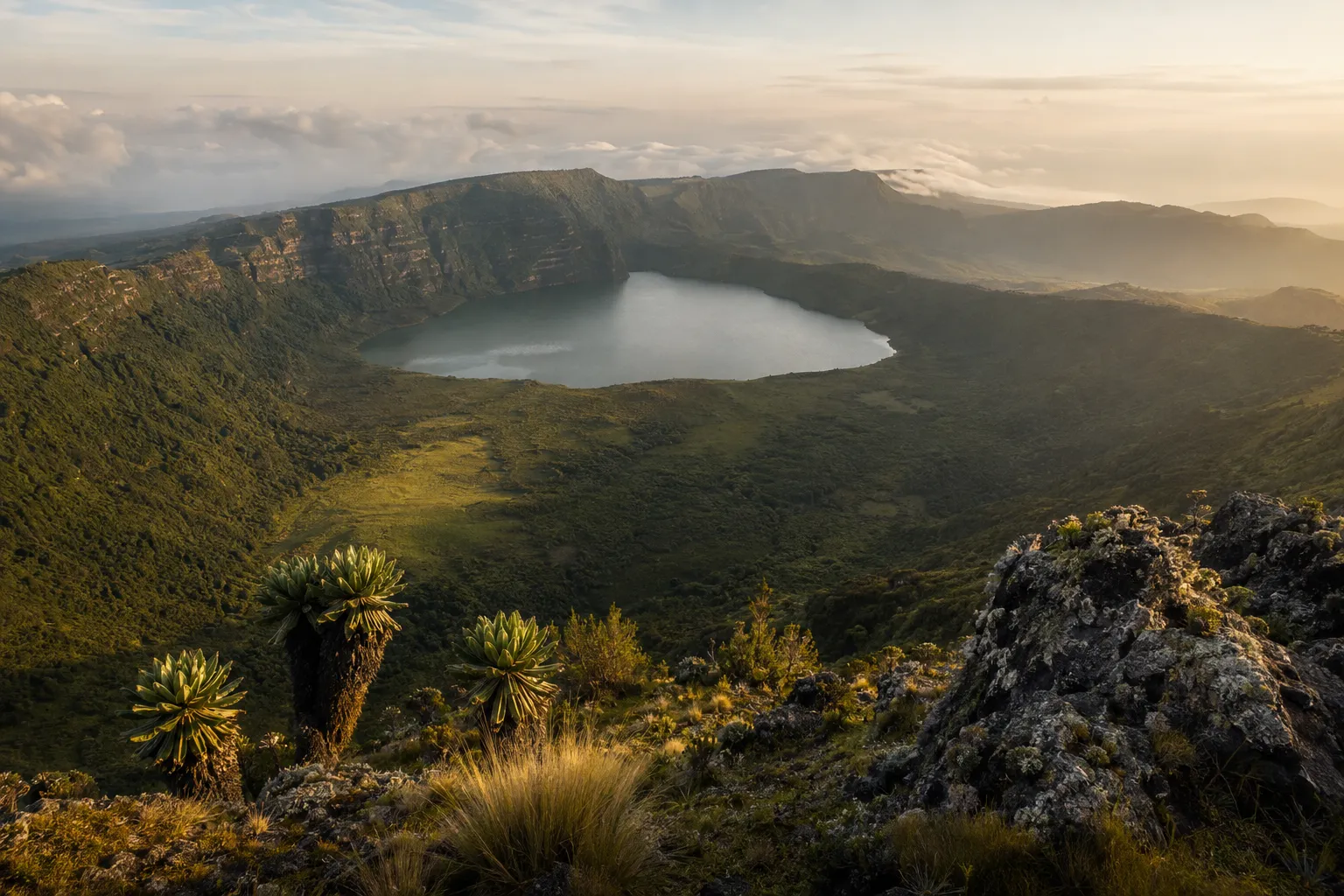
Ngorongoro is a caldera: a volcano that collapsed inward rather than blowing outward, leaving a near-circular crater with steep walls and a flat floor. The floor holds grassland, a soda lake, swamp and a patch of forest, and because the walls are steep, a great deal of the wildlife on it stays on it.
The result is a concentration of animals unlike anywhere else in the country. It is also a Conservation Area rather than a national park, which is a meaningful distinction: Maasai communities live and graze cattle within it, and that coexistence is part of what you are looking at.
Descending into the crater is one of the more extraordinary hours in African travel and one of the more crowded. Both things are true and any honest planner will tell you both.
Why come here
What Ngorongoro does that nowhere else does
- Density that no other Tanzanian park matches
- The crater floor is a small area holding a very large number of animals, so a single morning can produce a list that would take days elsewhere.
- The most reliable black rhino sighting in the country
- They are present on the floor and they are still rhino — nothing is guaranteed — but if you are going to see one in Tanzania, this is where the odds are best.
- The descent itself
- The road down the crater wall, with the whole floor opening beneath you, is a piece of theatre no camp can manufacture.
- The highlands around it
- The rim sits high, in cool forest that feels nothing like the plains below. The crater gets the attention; the highland country around it is where the quieter days are.
When to go
Any month works. The hour is what matters
Unlike the Serengeti, the crater does not change dramatically with the season — the animals on the floor largely stay on the floor. Green months make the walls and highlands spectacular and put cloud over the rim; dry months are clearer and busier.
What genuinely changes the experience is what time you get down there. Vehicles arrive in a wave from the lodges and from Karatu further away, so being early is the difference between a crowded morning and a quiet one. That is a routing and accommodation decision made at booking, not a preference stated on the day.
Altitude is worth knowing about: the rim is high enough that some guests notice it on a first night, which is a reason to order the route thoughtfully rather than a reason to avoid it.
See what each month gives you across Tanzania →Wildlife
What you are likely to see
- Lion, at high density on a small floor
- Black rhino, the most reliable chance of one in Tanzania and still never a certainty
- Elephant — often large old bulls, with breeding herds more usually on the forested slopes
- Buffalo, zebra, wildebeest, eland and a great deal of plains game
- Flamingo on the soda lake, in numbers that depend entirely on water levels
- Hyena and jackal, both unusually visible here
Likely, never promised. These are wild animals in very large areas, and an operator who guarantees a species is guaranteeing something that is not theirs to give.
How long
One full descent, and a night either side
The crater is a day, not a stay — a full morning on the floor is the standard and it is enough. What decides whether that day is good is where you slept the night before and how early you got moving. Two nights on or near the rim, with the descent on the middle morning, is the shape we would almost always build.
Getting here
- Overland from Arusha, usually as the second or third stop on a northern circuit
- Between Tarangire and the Serengeti, which is where it sits naturally on a route
- By air to a nearby airstrip and onward by road, where the days are tight
Be honest with yourself
Who Ngorongoro suits badly
- Travellers whose priority is solitude — this is the busiest wildlife area in Tanzania and no amount of planning changes that entirely
- Anyone hoping to spend several days on the crater floor; access is managed and a single full descent is the norm
- Guests who would be troubled by altitude on a first night without the route being ordered for it
Journeys that go here
How we build Ngorongoro into a trip
Common questions
Ngorongoro, answered plainly
- Is the Ngorongoro Crater worth it given the crowds?
- Yes, with one condition: get down early. The vehicles arrive in a wave, and being ahead of it is a decision made when your camps are chosen rather than on the morning itself.
- How long do you spend in the crater?
- A full morning on the floor is standard and is generally enough. It is a day within a longer journey rather than a destination you stay in.
- Will I see rhino at Ngorongoro?
- It is the best chance in Tanzania and it is still not a promise. They are wild animals on a large floor, sometimes distant, sometimes not out.
- Is Ngorongoro a national park?
- No — it is a Conservation Area, which is why Maasai communities live and graze within it. That coexistence is part of what makes it distinct, and it also means different rules from a national park.