



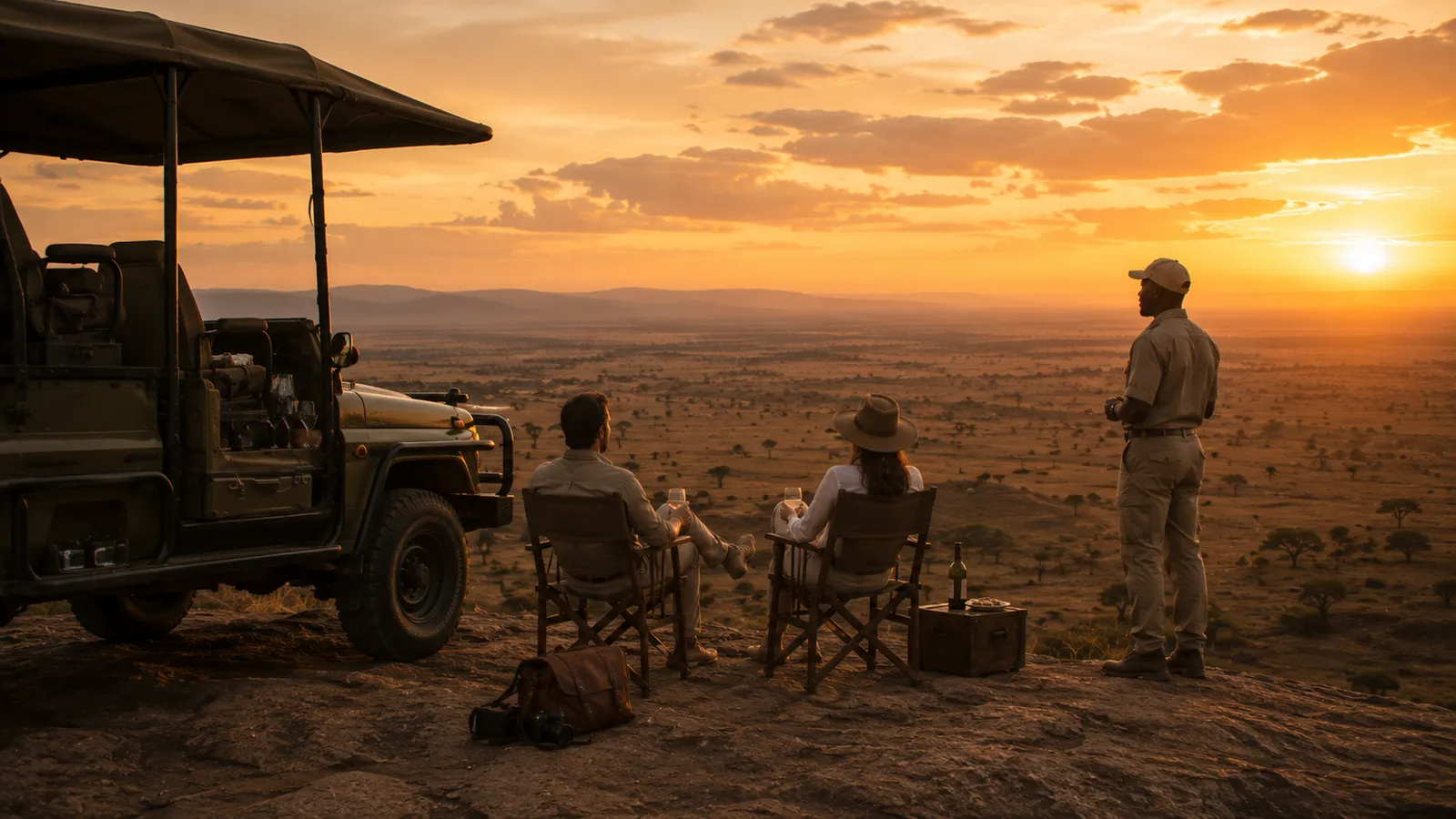
9–12 days · Private · Northern Tanzania
The Senior Luxury Safari
Comfort is a design decision, not an upgrade.
The northern circuit rebuilt around fewer moves, shorter days and better logistics — for travellers who have seen a great deal of the world and have no interest in enduring this part of it.
Length
9 to 12 days
Camp moves
Three, with flights between
Drives
Shorter, and yours to end
Altitude
Discussed before you book
Keep this route
The thinking
The standard itinerary is built around distance, not people
Most northern circuit itineraries are assembled to cover ground: six camps in twelve days, several hours of corrugated road between them, and a departure time set by how far there is to go. It is a perfectly good trip for someone who does not mind any of that.
For a great many travellers it is the wrong trip, and the reason is not age so much as judgement — having done enough travelling to know that six places seen tiredly is worse than three seen properly.
So the design here is subtractive. Fewer camps, flights instead of the longer road sections, ground-floor rooms, shorter drives and a day that ends when you have had enough of it. Nothing is removed from the wildlife; a good deal is removed from the wear.
Best for
- Experienced travellers who want Tanzania without enduring it
- Couples who would rather see three places well than six adequately
- Grandparents travelling with the family and wanting their own pace within it
- Anyone for whom long transfers, rough roads or early starts are the deciding factor
Not for
- Travellers who want maximum coverage in minimum days
- Anyone set on the remote parks, where the flying and the camps are harder
- Guests who would rather have more destinations than more comfort
Straight answer
Two things we should discuss before you book.
Altitude. The crater rim sits high enough that some guests notice it, particularly on the first night and particularly if they have a heart or lung condition. It is manageable and it is worth planning around rather than discovering, so tell your planner and we will order the route accordingly.
Distance from medical care. Safari camps are remote by design. We will be specific about what is near each place on your itinerary and about the evacuation arrangements, and comprehensive travel and medical insurance is a requirement rather than a suggestion.
Tell us plainly about mobility, medication, dietary needs and anything else that matters. None of it limits the journey; all of it changes how we build it, and it is much easier to build correctly than to fix on day four.
Day by day
Nine to twelve days, three places
Days 1–2
Arrival, and a day to land
Straight to somewhere comfortable near the airport rather than a long transfer on the first afternoon, and a full day before the safari starts. Long-haul flights cost more than people budget for, and a day of nothing at the front pays for itself over the following week.
Signature momentA first morning with no alarm and no vehicle.
Days 3–4
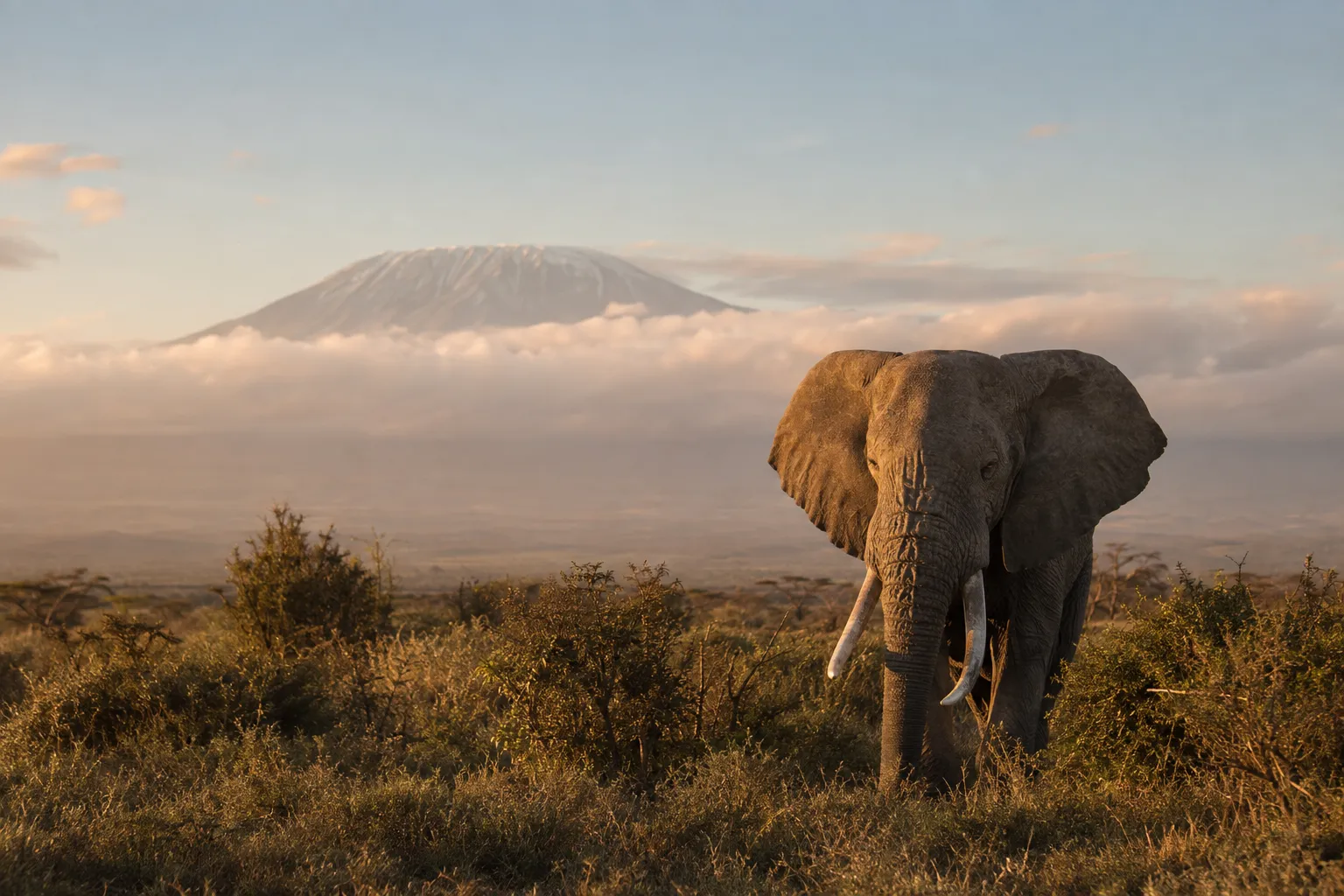
Elephant country
Into the baobab and river country, which is the gentlest introduction the north offers: good roads, close wildlife, and a camp you can walk out of. Drives at either end of the day, back for lunch and a long middle. The pattern of the whole journey is set here.
Signature momentElephants at a river, watched from a vehicle that is not going anywhere.
Days 5–6
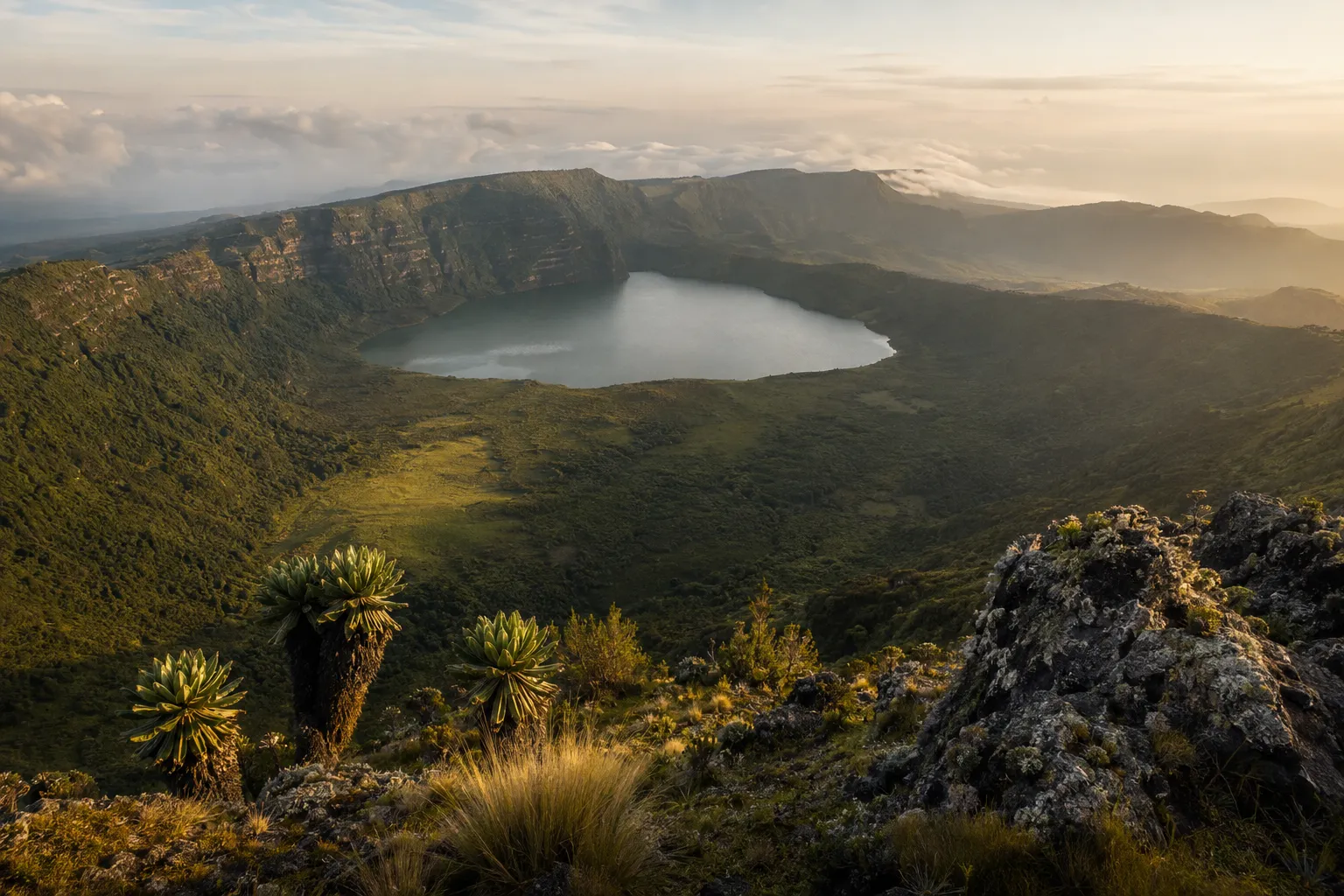
The highlands and the crater
Up to the rim, with the altitude taken slowly and the crater descent on the second morning rather than the arrival afternoon. A full crater day is a long one, so it is the only demanding day on the itinerary and it is placed where you are rested.
Signature momentThe crater floor early, before the vehicles from further away arrive.
Days 7–10
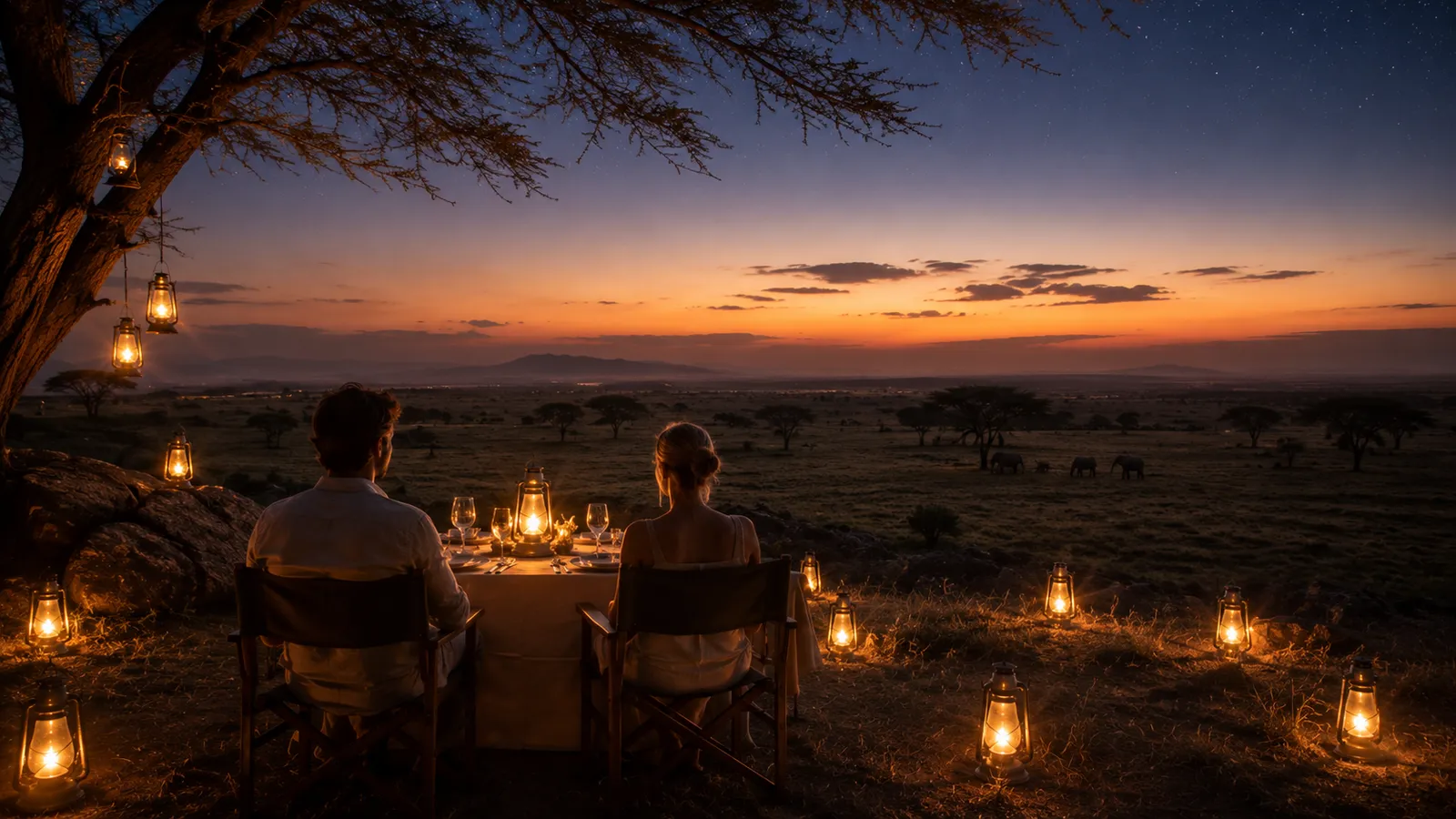
The Serengeti, flown into
A short flight rather than a long drive, then four nights in one camp. Four nights is the decision that makes this journey work — no packing mornings, no transfers, and enough time to have unhurried days and still see a great deal. Drives when you want them; the vehicle and the guide are yours either way.
Signature momentThe morning you decide not to go out, and are glad you did not.
Days 11–12
Out gently, or on to the coast
A last morning without a schedule and a flight timed so the day is not a scramble. A week on the coast afterwards suits this journey particularly well and is a much easier ending than a long-haul flight straight off the plains.
Signature momentLeaving late, which is a small thing and is not.
Three camps in eleven days is the shape and we would resist adding a fourth. Flights replace the longest road sections. Room type, ground-floor access, altitude ordering and anything else that matters are settled before booking rather than requested on arrival.
Tanzania, on the routes we run.
Included
- Private vehicle and Highland guide throughout
- Internal flights replacing the longest road sections
- Park and conservation fees for the areas on the route
- Accommodation and meals on the basis set out in your written itinerary
- A named planner before you travel and in-country support during it
Not included
- International flights
- Tanzanian visa and any entry requirements
- Travel and medical insurance, which we require and which matters here
- Optional experiences and any medical or mobility equipment
- Personal spending and gratuities
Nothing compulsory gets added later. If a cost appears after quoting, it is because you asked for it.
In the design
What the journey is built around
- Your own vehicle and guide, never shared, with the day ending when you decide
- Three camps at most, with internal flights replacing the longest drives
- Ground-floor or easily accessible rooms wherever the property allows
- A rest day at the front, and an unhurried departure at the back
- Accommodation and meals on the basis set out in your written itinerary
Subject to season and to how you want the journey paced — your written itinerary is the version that counts.
Why this shape
Because the constraint is usually the itinerary, not the traveller
Guests tell us they are not sure they are up to a safari, and when we ask what they have been quoted it is almost always six camps and a great deal of driving. Very few people are up to that; most simply do not say so.
Rebuild the same country around three camps, two flights and shorter days and the objection disappears. Nothing has been diluted — the crater, the elephants and the Serengeti are all still there. What has gone is the wear, and that was never the point of coming.
Questions
Before you ask us
- Is the altitude a problem?
- The crater rim is high enough that some guests notice it, particularly on a first night. It is very manageable when the route is ordered for it. Tell your planner about any heart or lung condition and we will build accordingly.
- How far are we from medical help?
- Safari camps are remote by design. We will be specific about what is near each place on your itinerary and about evacuation arrangements, and comprehensive travel and medical insurance is a requirement.
- Can we have ground-floor rooms?
- Wherever the property allows it, and we check rather than assume. We will also tell you where a camp in a wonderful position is a difficult one to move around.
- Will we see less because the days are shorter?
- A little less driving, and generally not less wildlife — four nights in one well-placed camp sees more than two nights each in two average ones.
- Can we travel with our grandchildren?
- Often the best version of this. We can share camps with the family journey while keeping the schedules separate, so nobody is pacing to somebody else’s day.
The difference
What that actually means in practice
- Flights instead of the worst roads
- The longest and roughest sections of the northern circuit are replaced by short flights. It costs more and it is the single largest improvement available to this itinerary.
- Room access confirmed before booking
- Ground-floor, distance to dinner, steps, paths after dark. We check rather than assume, and we will tell you where a camp in a superb position is also a difficult one to live in.
- Altitude is planned, not discovered
- The crater rim is high. Where it sits in the route, and how long you spend there, is decided with you rather than by the standard itinerary.
- Every day ends when you say
- The vehicle and the guide are yours. Nobody else in the party is waiting to go on, because there is no other party.
Design decisions
How we built this journey
- A rest day before the safari starts
- The first two days of any long-haul trip are the worst ones. Spending them in a park wastes both the days and the park.
- The crater day placed late
- It is the longest day on the itinerary. Putting it on an arrival afternoon, which is common, is how it becomes the day people remember for the wrong reason.
- Four nights in the last camp
- It removes two packing mornings and a transfer, and it is where the journey stops being travel and starts being a stay.
The standards behind it
What protects the experience
Where you stay
Ground-floor rooms, short walks from the vehicle, and no property where getting to dinner is an expedition. Position still decides the safari, so the balance is between how close the wildlife is and how easy the camp is to live in — and we will tell you which way each place leans.
We do not publish a property list, because the right camp depends on your month, your route and your party. Your written proposal names the camps we recommend, the room category and why each was chosen — how we choose them.
Guided by Tanzania knowledge
A guide who paces the day rather than filling it, watches for fatigue without commenting on it, and knows the routes with the least corrugation. Most of this work is invisible, which is the point.
We match a guide to the journey rather than assign one to the booking — the Highland guiding standard.
On safari
- Your own vehicle and guide, never shared with another party
- Responsible viewing distances, and a guide who will refuse a closer approach
- Guides experienced in the specific parks on your route, in the season you travel
- Emergency procedures briefed before you travel, not improvised on the day
- A named planner before you go and a duty phone answered in Moshi while you are away
Investment
What this journey usually costs, and why it moves
Signature Private to Private Reserve · $5,000–$9,000 per guest to $9,000–$16,000+ per guest
Private road and short-haul journeys through Tanzania’s iconic wildlife landscapes, with strong guiding and intelligent pacing.
Greater privacy, strategic aviation, stronger camp positions and specialist experiences where they materially improve the journey.
- Travel month
- Migration periods, festive dates and the northern high season carry stronger demand. Shoulder and green seasons can materially reduce the price.
- Accommodation
- The largest single lever. Property, room category, meal and drink basis all change the real operating cost.
- Route and pace
- More nights in fewer places may improve the journey; remote regions cost more to reach and supply.
- Domestic aviation
- Scheduled flights and charters can buy back whole days. They are included only where the product page and confirmed proposal say so.
- Party and rooming
- Vehicle, guide and fixed logistics are divided across the party. Solo travel, single rooms, family rooms and exclusive use change the per-person figure.
- Special experiences
- Balloon flights, private dining, specialist vehicles, walking, boating and marine days are costed when they are genuinely part of the design.
A journey-level planning band, not a quote. The written proposal carries the real number for your dates, rooming, camps, fees, aviation and included experiences.
Yours, not ours
How this changes for you
- Extended with a coastal week, which is a much gentler ending than flying home off the plains
- Built as the grandparents’ version alongside a family journey, sharing camps but not the schedule
- Shortened to nine days with two camps for travellers with less time
- Adapted for specific mobility requirements, discussed in detail before anything is held
Where this journey goes
Read about the places first
- Tarangire National ParkBaobab country with a river through it — the elephant park of the northern circuit, and the one most itineraries give too little time to.
- The Ngorongoro CraterA collapsed volcano holding a self-contained ecosystem on its floor — the densest concentration of large mammals in Tanzania, and the busiest.
- The SerengetiThe plains that most people mean when they say safari — and a park large enough that where you stay in it matters more than whether you go.
Related journeys
If this one is not quite it
Design your Tanzania journey
Tell us what you imagine — the month, who is travelling and the kind of Tanzania you have in mind. Our planners shape the route, the pace and the experiences around you, and a costed day-by-day plan with named camps comes back within 48 hours.
Begin your private journeySpeak with a Tanzania specialist