



8–10 days · Private · Mountain to coast
Food & Wine in Tanzania
Coffee on the mountain, spice on the island, and the sea in between.
Tanzania read through what it grows and cooks — Chagga coffee on Kilimanjaro’s slopes, Swahili coastal cooking with its Omani and Indian inheritance, markets, spice country and meals eaten where the ingredients came from.
Length
8 to 10 days
Route
Mountain, plains, island
Hands on
Markets, kitchens, farms
Wine
Honestly, a small part
Keep this route
The thinking
The coast has been cooking with the Indian Ocean for a thousand years
Tanzanian food is two stories that meet. Inland it is agricultural and local — bananas, beans, maize, the coffee that grows in the shade on Kilimanjaro’s southern slopes. On the coast it is a trading cuisine, shaped by centuries of Omani, Indian, Portuguese and African exchange, and it tastes like it.
Nobody travels here for the restaurants, and this journey does not pretend they should. It goes to the source instead: the farm, the market, the spice ground, the boat, and the kitchen where somebody who has cooked it their whole life shows you how.
It also happens to solve the dullest problem in safari itineraries, which is the four hours in the middle of every day when the animals are asleep.
Best for
- Travellers who plan holidays around what they will eat
- Couples wanting a route with something to do in the middle of the day
- Repeat visitors adding a different thread to a country they know
- Anyone curious about how four cuisines ended up on one coastline
Not for
- Guests expecting a fine-dining tour — that is not what this country offers or what this is
- Travellers wanting a wine-focused journey; Tanzania is not that country
- Anyone whose priority is maximum wildlife time
- Restrictive diets that have not been discussed beforehand — tell us early and we will design around them
Straight answer
On the wine, we should be straight with you.
Tanzania does make wine — the Dodoma region has a small industry and it is genuinely interesting to try — but this is not South Africa and it would be dishonest to build a journey around it. What is on the itinerary is a tasting and a conversation, not a wine route.
The strength of this journey is coffee, spice, seafood and coastal cooking. If wine is the reason you are considering it, we would tell you to spend the money elsewhere.
Tell us about allergies and dietary requirements at the enquiry rather than on arrival. Some of the best parts of this journey happen in village kitchens and on boats, and they are much easier to adapt in advance than on the day.
Day by day
Eight to ten days, mountain to island
Days 1–2
Coffee, on the mountain that grows it
Into the Chagga farmland on Kilimanjaro’s southern slopes, where coffee grows under banana and the hillsides look like forest until you are inside them. Picking, pulping, drying, roasting and drinking, in the order it actually happens, with the family that farms it. The market in Moshi afterwards, which is where the rest of the region’s food comes from.
Signature momentCoffee picked, roasted and drunk in the same afternoon, on the mountain it came from.
Days 3–5
The plains, and cooking in the bush
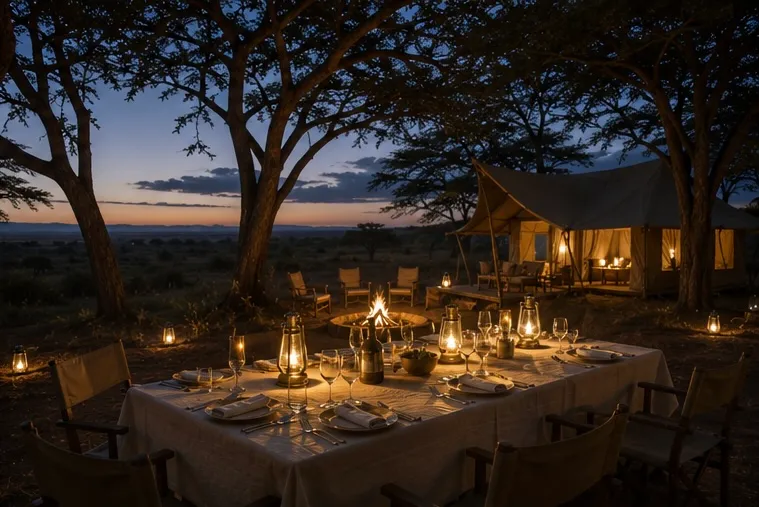
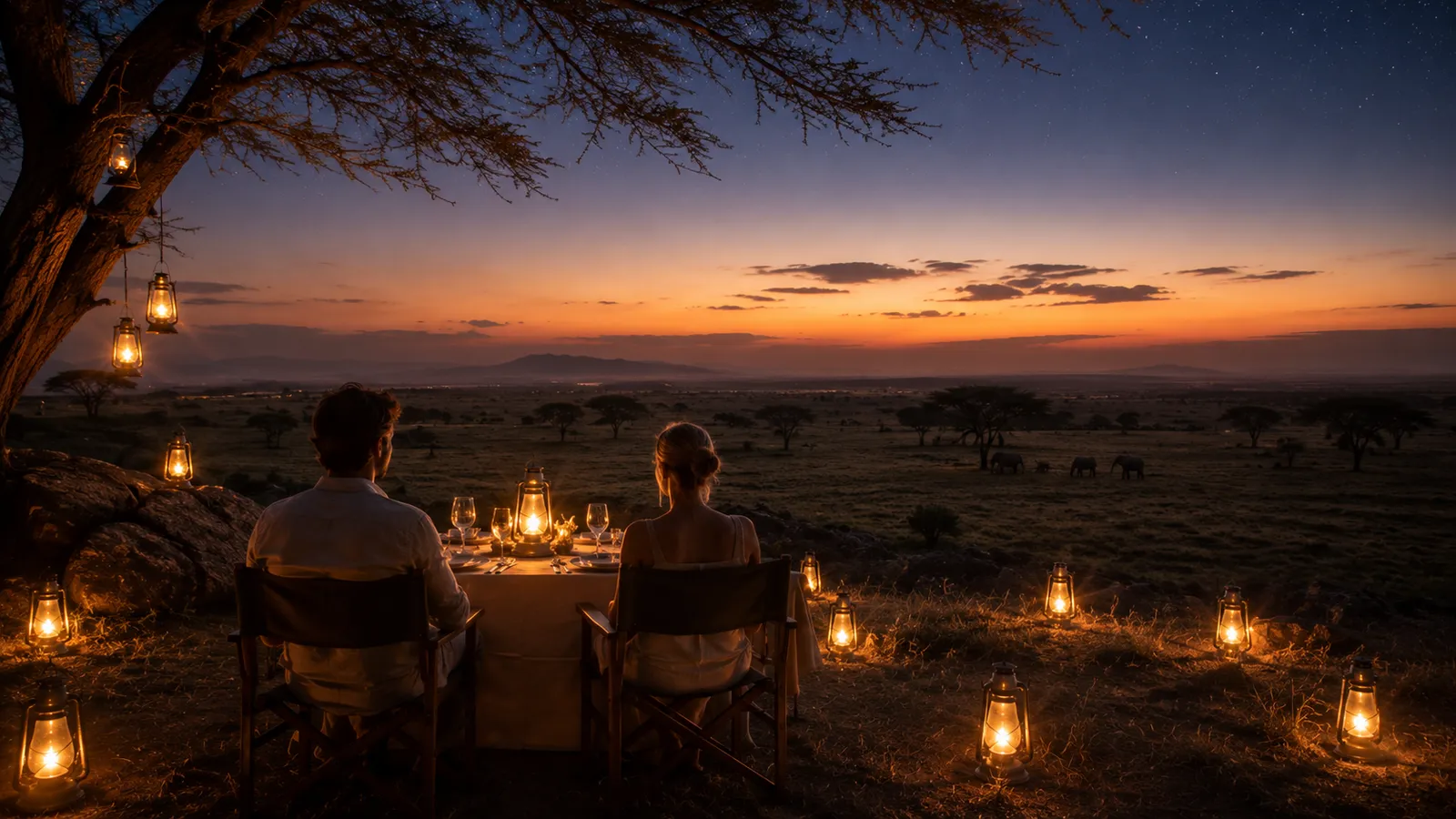
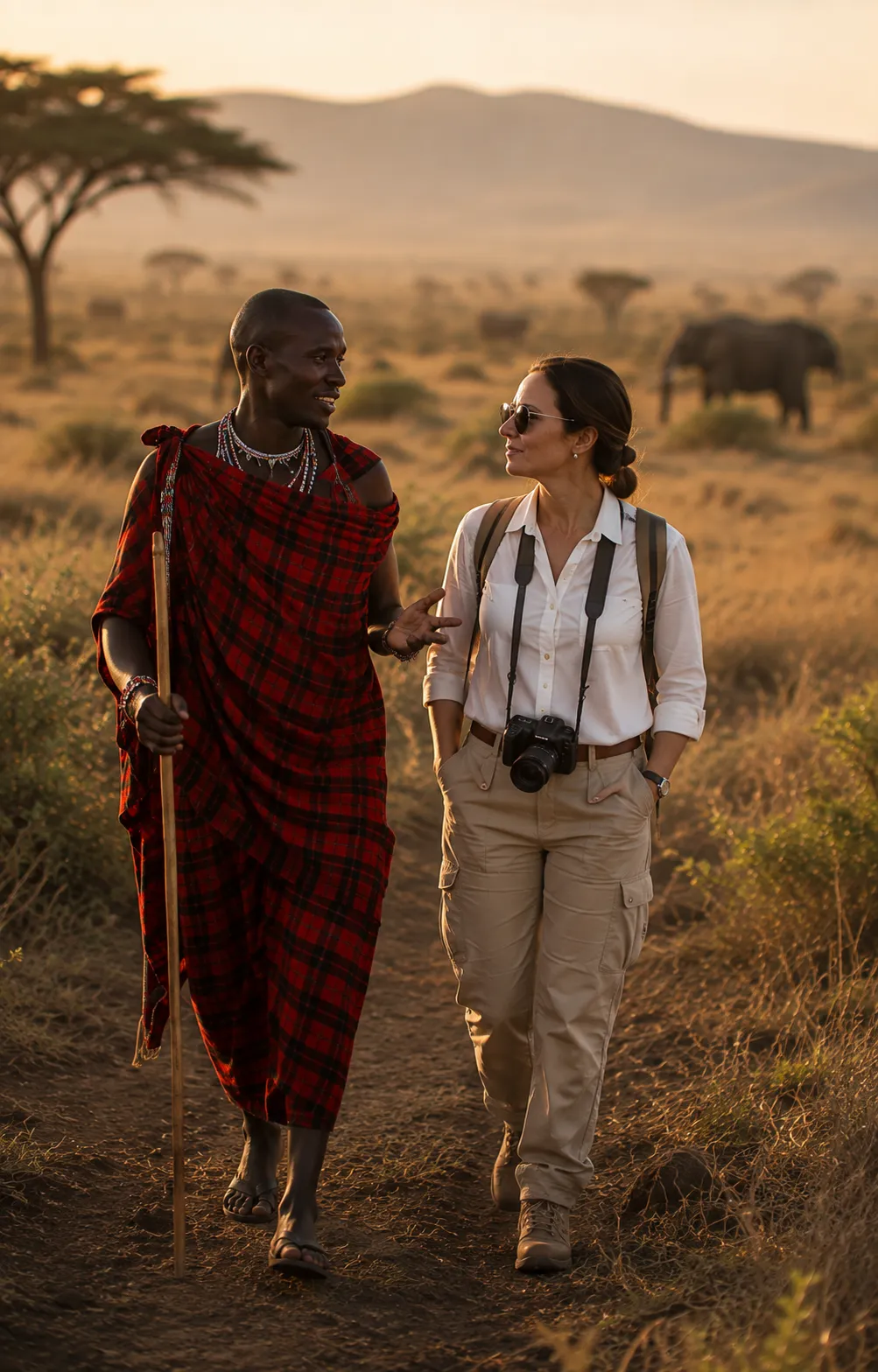
A proper safari chapter, because you should not come to Tanzania and skip it — elephant country and the crater highlands, with game drives at either end of the day. The middle hours, usually the dead part of a safari day, go to lunch that has been thought about and to the camp kitchens, which on this route are chosen for exactly that reason.
Signature momentA bush lunch that was cooked rather than assembled.
Days 6–7
Spice country
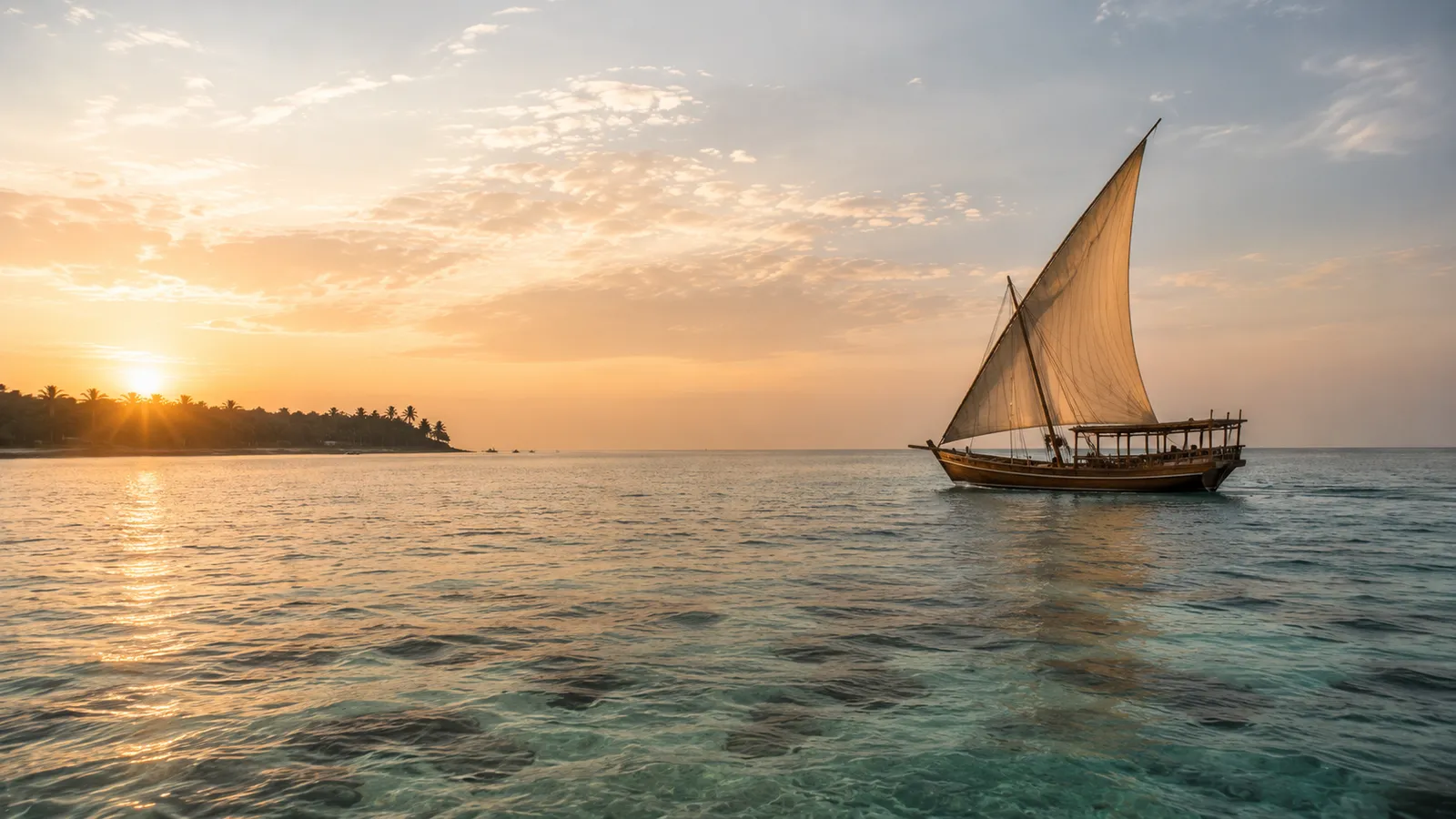
Across to the island and into the spice farms inland from town — cloves, nutmeg, cardamom, pepper and vanilla, seen growing rather than in a jar. Then Stone Town, which is a food city: the market, the street food, and the Omani and Indian threads that run through everything on the plate.
Signature momentTasting a spice off the tree and recognising a dish you ate last night.
Days 8–10
The sea, and the kitchen
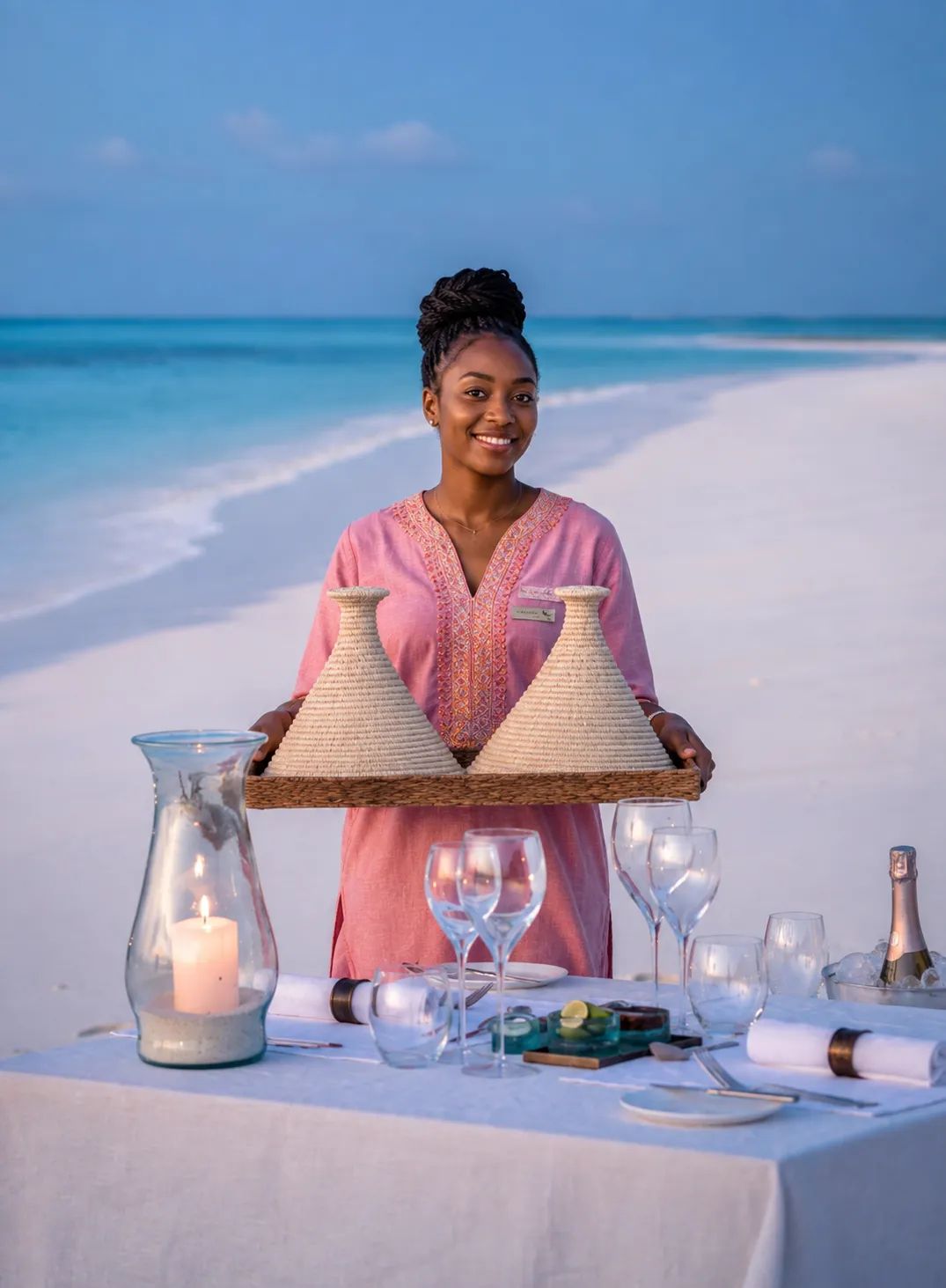
Out to the coast for the last chapter: fish landed in the morning and cooked at lunch, coconut and tamarind and lime doing the work, and a proper cooking session with somebody who does it every day rather than a demonstration for guests. Dinner on the sand on the last night, which is a cliché and is also very good.
Signature momentCooking the fish you watched come off the boat.
The order can reverse — starting on the coast and ending on the mountain works equally well and sometimes suits flights better. Which farms, markets and kitchens are on your itinerary depends on the season and on who is available, and your written proposal will name them.
Tanzania, on the routes we run.
Included
- Private vehicle and Highland guide throughout
- Farm, market, spice and cooking experiences as set out in your itinerary
- Park and conservation fees for the areas on the route
- Accommodation and meals on the basis set out in your written itinerary
- Internal flights or transfers on the route
Not included
- International flights
- Tanzanian visa and any entry requirements
- Travel and medical insurance, which we require
- Optional experiences and personal purchases
- Personal spending and gratuities
Nothing compulsory gets added later. If a cost appears after quoting, it is because you asked for it.
In the design
What the journey is built around
- Your own vehicle and Highland guide, never shared
- Farm, market and spice visits led by the people who work them
- Hands-on cooking with local cooks rather than demonstrations
- A safari chapter, because the country is worth it and the middle hours are free anyway
- Accommodation and meals on the basis set out in your written itinerary
Subject to season and to how you want the journey paced — your written itinerary is the version that counts.
Why this shape
Because the plate explains the coast faster than a museum does
A thousand years of trade between Africa, Arabia and India is a difficult thing to feel from a plaque. It is very easy to taste, and once you have, Stone Town and the whole coastline read differently.
We built this to be a real journey rather than a food tour with a safari bolted on. The two halves use different hours of the same day, which is why it works.
Questions
Before you ask us
- Is there really a wine element?
- A small and honest one. Tanzania makes wine in the Dodoma region and it is worth tasting, but this is not a wine country and we will not sell it as one. Coffee, spice and coastal cooking are the substance of the journey.
- Do we still go on safari?
- Yes, properly. The wildlife chapter is real, and the cooking happens in the middle hours of the day when the animals are asleep anyway.
- Can you handle dietary requirements?
- Yes, and much better with notice. Some of the best parts happen in village kitchens and on boats, so tell us at the enquiry rather than at the table.
- Is the food safe?
- We use kitchens and providers we know, and your guide will steer you on markets and street food. Ordinary long-haul travel sense applies; nothing on this route is a gamble.
The difference
What that actually means in practice
- Source first, restaurant second
- The journey goes to farms, markets, spice grounds and boats. Tanzania’s strength is where the food comes from, not where it is served.
- The dead hours are used
- Every safari day has four hours in the middle when the wildlife is asleep. On this route those hours have the kitchens in them, which is why it does not feel like two journeys stapled together.
- We are honest about the wine
- Dodoma is on the itinerary as a tasting and a conversation. Building a wine route here would be selling you something the country does not have.
Design decisions
How we built this journey
- Mountain first, island last
- Coffee, then plains, then spice, then the sea is the order the country actually makes sense in. Reversed it works; scrambled it does not.
- Local cooks lead, not chefs
- A demonstration by a hotel chef is a nice hour. Cooking with somebody who makes it every day is the reason to have come.
- A real safari chapter, not a token one
- Guests who skip the wildlife on a first trip to Tanzania regret it, and the middle of the safari day was free anyway.
The standards behind it
What protects the experience
Where you stay
Places that take their kitchens seriously, which is a shorter list than it should be and is not the same list as the one with the best rooms. On the coast, somewhere with a cook worth talking to matters more than the size of the pool.
We do not publish a property list, because the right camp depends on your month, your route and your party. Your written proposal names the camps we recommend, the room category and why each was chosen — how we choose them.
Guided by Tanzania knowledge
A guide comfortable in markets and kitchens as well as parks, and local cooks and farmers leading the parts of the day that are theirs. Highland arranges; the people who grow and cook it do the teaching.
We match a guide to the journey rather than assign one to the booking — the Highland guiding standard.
On safari
- Your own vehicle and guide, never shared with another party
- Responsible viewing distances, and a guide who will refuse a closer approach
- Guides experienced in the specific parks on your route, in the season you travel
- Emergency procedures briefed before you travel, not improvised on the day
- A named planner before you go and a duty phone answered in Moshi while you are away
On the water
- Established operators, chosen for their record rather than their price
- Weather and tide assessed on the day; excursions moved or cancelled when they should be
- Appropriate equipment and briefing for every activity
- Responsible marine practice around reef and wildlife
Investment
What this journey usually costs, and why it moves
Signature Private to Private Reserve · $5,000–$9,000 per guest to $9,000–$16,000+ per guest
Private road and short-haul journeys through Tanzania’s iconic wildlife landscapes, with strong guiding and intelligent pacing.
Greater privacy, strategic aviation, stronger camp positions and specialist experiences where they materially improve the journey.
- Travel month
- Migration periods, festive dates and the northern high season carry stronger demand. Shoulder and green seasons can materially reduce the price.
- Accommodation
- The largest single lever. Property, room category, meal and drink basis all change the real operating cost.
- Route and pace
- More nights in fewer places may improve the journey; remote regions cost more to reach and supply.
- Domestic aviation
- Scheduled flights and charters can buy back whole days. They are included only where the product page and confirmed proposal say so.
- Party and rooming
- Vehicle, guide and fixed logistics are divided across the party. Solo travel, single rooms, family rooms and exclusive use change the per-person figure.
- Special experiences
- Balloon flights, private dining, specialist vehicles, walking, boating and marine days are costed when they are genuinely part of the design.
A journey-level planning band, not a quote. The written proposal carries the real number for your dates, rooming, camps, fees, aviation and included experiences.
Yours, not ours
How this changes for you
- Extended on the coast for guests who want more kitchen and less driving
- Combined with Bagamoyo for the trading history behind the coastal cuisine
- Built around a specific interest — coffee, spice or seafood — rather than all three
- Adapted fully for dietary requirements, which is easier the earlier you tell us
Where this journey goes
Read about the places first
- Mount KilimanjaroThe highest mountain in Africa, and the highest free-standing mountain in the world — walked up rather than climbed, which is precisely why it is underestimated.
- ZanzibarAn island with a thousand years of trading history and a coastline that behaves very differently depending on which side of it you book.
Related journeys
If this one is not quite it
Design your Tanzania journey
Tell us what you imagine — the month, who is travelling and the kind of Tanzania you have in mind. Our planners shape the route, the pace and the experiences around you, and a costed day-by-day plan with named camps comes back within 48 hours.
Begin your private journeySpeak with a Tanzania specialist