



Kilimanjaro Region
Mount Kilimanjaro
The highest mountain in Africa, and the highest free-standing mountain in the world — walked up rather than climbed, which is precisely why it is underestimated.
What it is
Mount Kilimanjaro in plain terms
Kilimanjaro stands alone on the plains of northern Tanzania rather than in a range, which is what makes it look the way it does from a hundred kilometres away. Highland has operated at its foot, in Moshi, since 2001.
It is a trek rather than a technical climb. There is no rope work and no climbing experience required on the standard routes, and that is exactly why so many people arrive underprepared for the thing that actually stops them, which is altitude.
Almost nobody turns back because of the terrain. They turn back because of a decision made at booking about how many days to give their body to adjust. That decision is the single most important one on this page.
Why come here
What Kilimanjaro does that nowhere else does
- You walk through five climate zones
- Rainforest, moorland, alpine desert, then the summit zone. Few places on earth compress that much change into a few days of walking, and it is a large part of what people describe afterwards.
- No technical skill required
- Fitness and patience matter; ropes and ice axes do not. That opens the mountain to a far wider range of people than its height suggests.
- The summit night
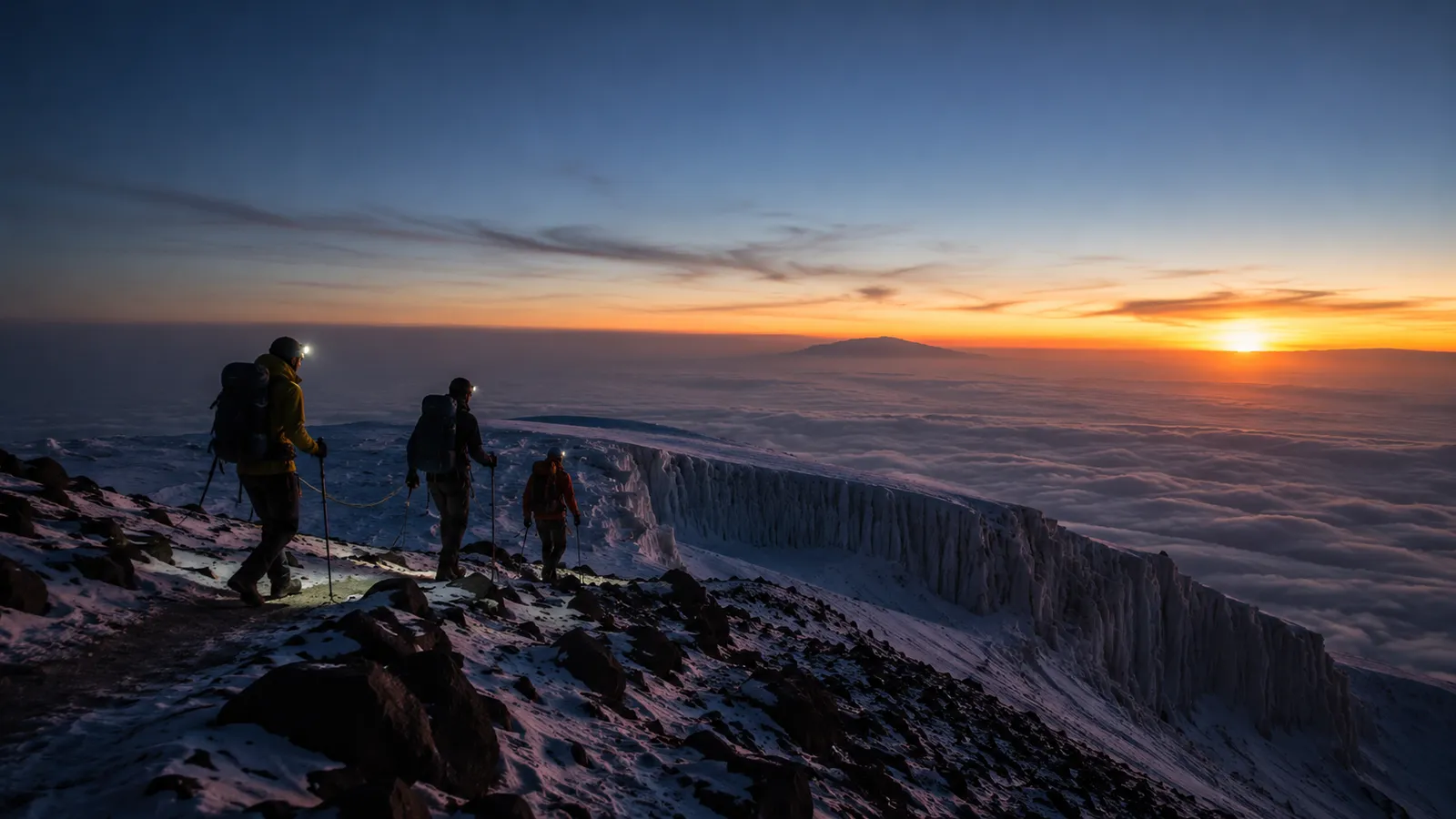
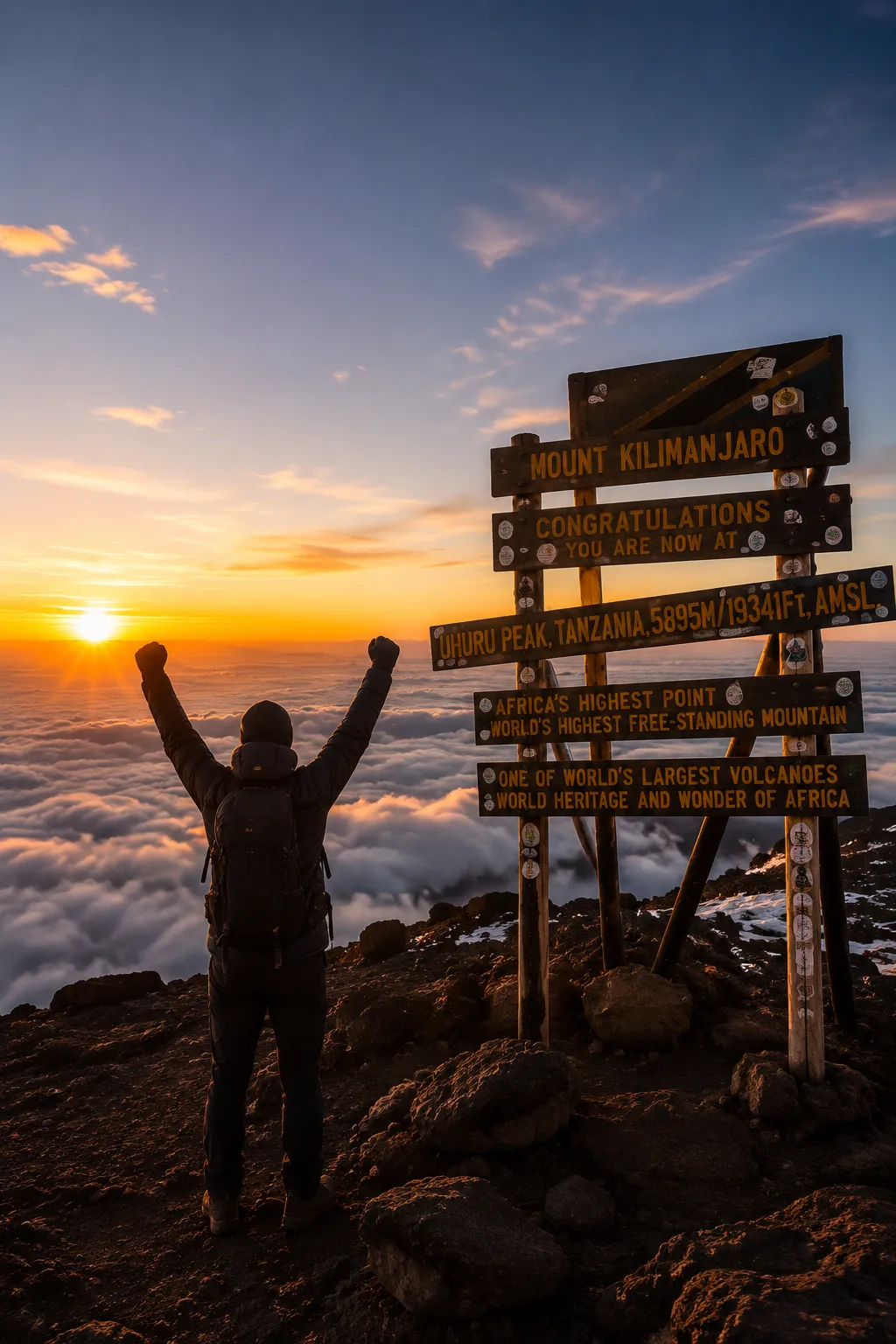
- Leaving in the dark to reach the crater rim at sunrise, above a sea of cloud, is the hardest and the best part of it. It is also long, cold and slow, and being honest about that beforehand is part of the job.
- It pairs naturally with a safari
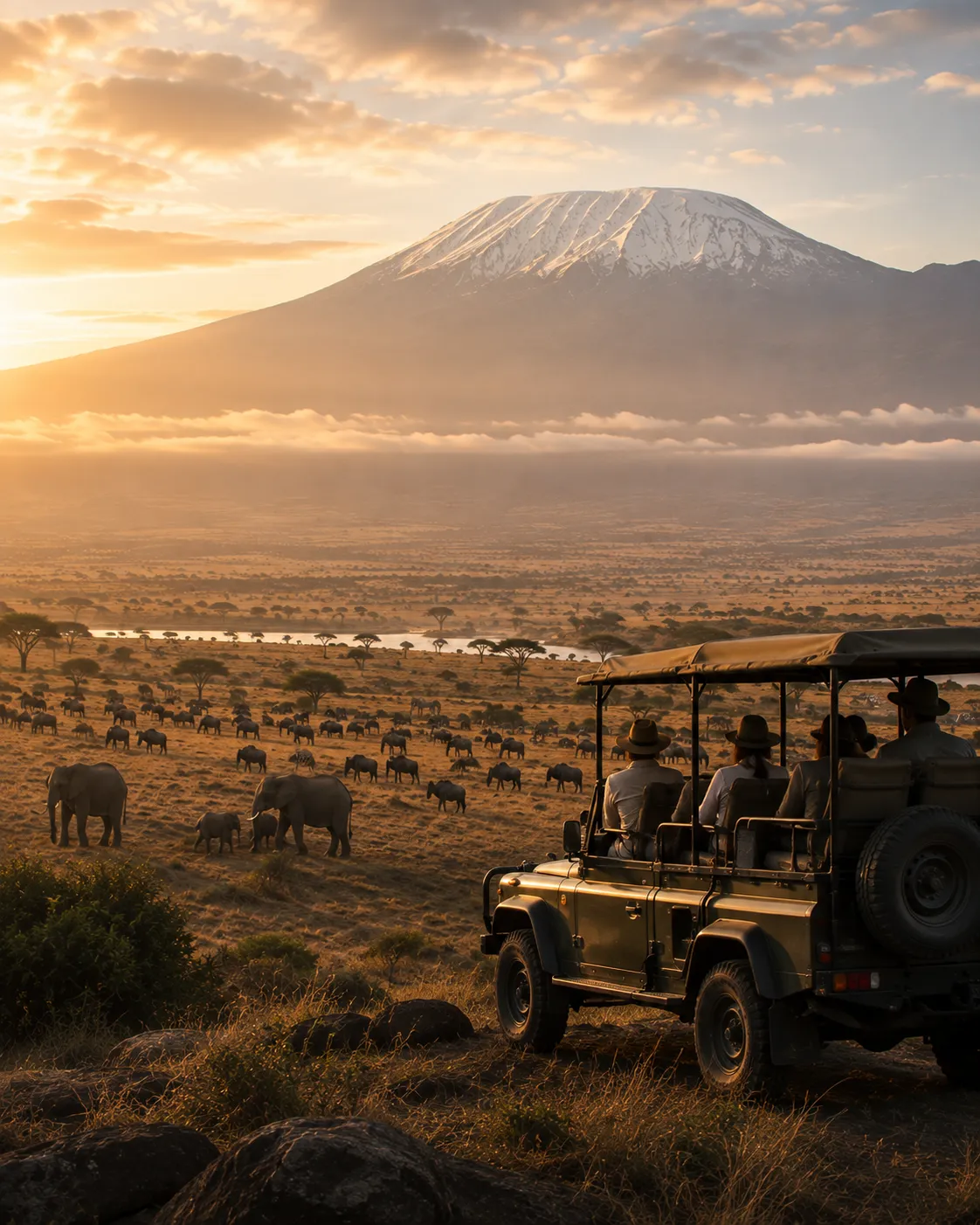
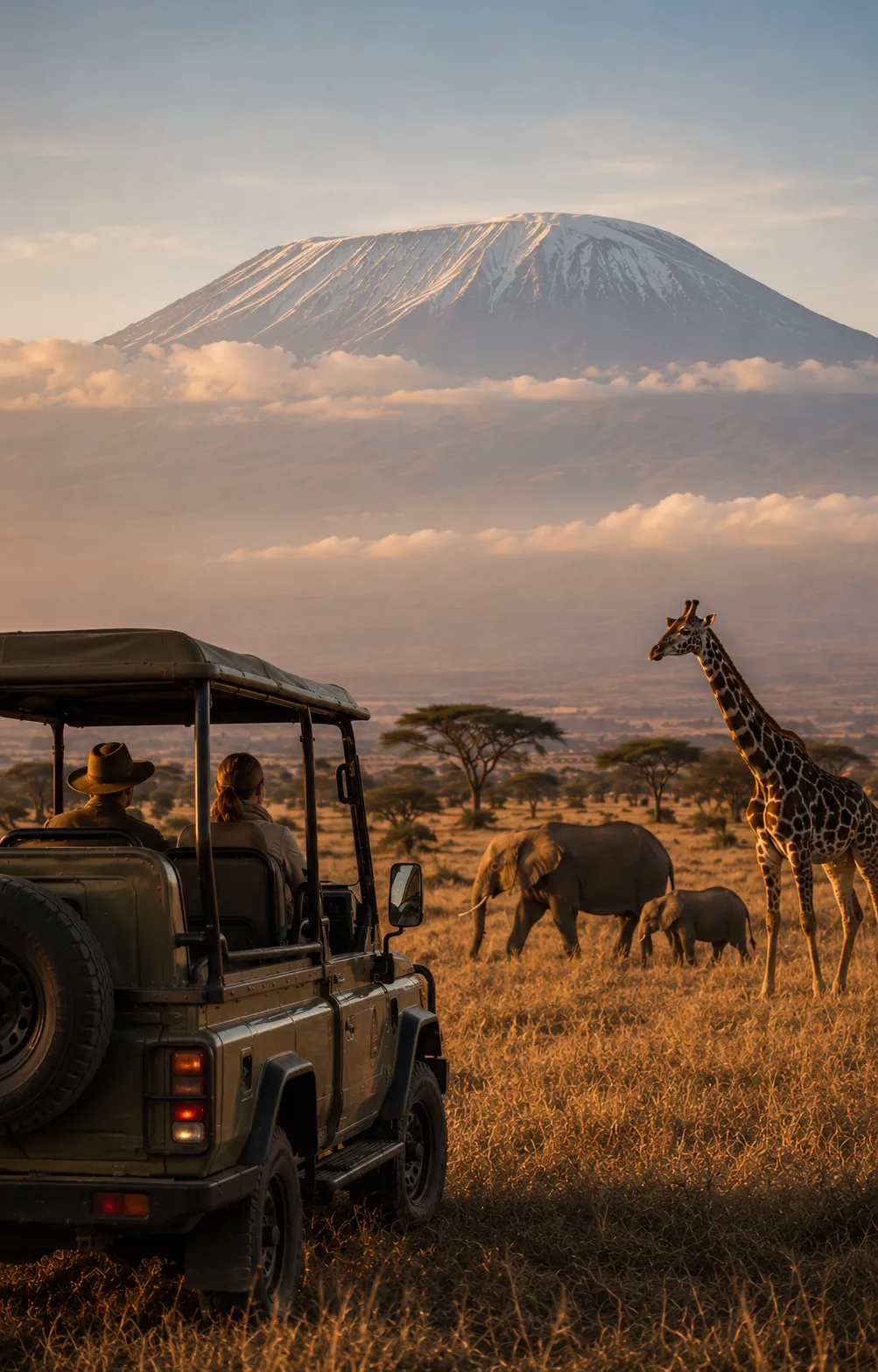
- The northern circuit is on the same side of the country. Climbing first and recovering on a safari afterwards is the order that works; nobody willingly leaves a good safari to start a climb.
When to go
Two dry windows, and two you should think hard about
The mountain is climbed year-round, but conditions are most settled in the two dry periods — the long one in the middle of the year and the shorter one around the turn of the year. Those are the months with the clearest summit views and the most reliable trail conditions, and they are also the busiest.
The long rains bring genuinely difficult conditions on the lower slopes and reduce the chance of a clear summit morning considerably. It is climbed then, and we will tell you plainly what you are taking on rather than take the booking quietly.
Full-moon summit nights are worth asking about if the timing is flexible: the summit push is done in darkness, and the difference in visibility is substantial.
See what each month gives you across Tanzania →How long
Days on the mountain are the variable that decides the outcome
The shortest itineraries give the body the least time to adjust to altitude, and they are the ones with the lowest success rates. Longer routes with an extra acclimatisation day cost more and are very much more likely to get you to the top feeling like a person. We would rather recommend a longer route than watch somebody spend a year preparing and turn back on the last night — and that is a commercial position as well as a moral one.
Getting here
- Kilimanjaro International Airport sits between Moshi and Arusha, an hour or so from the trailheads
- Moshi is the town at the foot of the mountain and where most climbs are briefed and outfitted
- The northern circuit parks are on the same side of the country, which is why the two combine so easily
Be honest with yourself
Who Kilimanjaro suits badly
- Travellers who have not trained — altitude punishes arriving unprepared, and no guide can fix that on day four
- Anyone whose available days force a route with too little acclimatisation
- Guests looking for a comfortable holiday; this is several days of walking and one very hard night
- Anyone shopping on price alone, where the saving is almost always days on the mountain
Journeys that go here
How we build Kilimanjaro into a trip
Common questions
Kilimanjaro, answered plainly
- How hard is it to climb Kilimanjaro?
- Physically demanding rather than technically difficult. The walking is long and the summit night is genuinely hard, but there is no climbing skill required. What defeats most people is altitude, and the main defence against altitude is giving yourself more days.
- Which Kilimanjaro route is best?
- It depends on your fitness, the days you have and how much acclimatisation you want. We operate all the main routes and therefore have no commercial reason to push one — the recommendation follows you, not our roster.
- How many days do you need to climb Kilimanjaro?
- More than the minimum being advertised. The shortest itineraries have the lowest success rates precisely because they compress acclimatisation. Your planner will be specific about what your dates allow.
- What is the best month to climb Kilimanjaro?
- The two dry windows give the most settled conditions and the clearest summits, and they are also the busiest. The long rains are the period we would talk you out of if your dates are movable.
- Do I need climbing experience?
- No. The standard routes are treks. Hiking experience helps and real training helps more, but ropes and technical skills are not part of it.