




7–9 days · Private · Mountain
Kilimanjaro Summit Expedition
Standing above Africa.
Africa’s highest peak, climbed with the preparation, pacing and support that decide whether the mountain is an achievement or an ordeal.
Length
7 to 9 days
Region
Kilimanjaro National Park
Style
Private, guided, full crew
Route
Chosen with you, not sold to you
Keep this route
The thinking
The summit is not the experience. It is the last morning of it.
Most people picture Kilimanjaro as one moment: reach the top, take the photograph, come down. The mountain is far more than its summit, and treating it as a single objective is precisely what makes people fail to reach it.
What people actually describe afterwards is the gradual transformation — the first hours through rainforest, the ecosystems changing beneath them, the quiet mornings above cloud, the crew, and the point where the horizon opens and the height becomes real.
So the journey is built around respect for the mountain: the right route for the person climbing it, a pace set by acclimatisation rather than ambition, and preparation that starts before anyone leaves the gate.
Best for
- Travellers who want a genuine physical challenge with proper support behind it
- Couples and milestone celebrations where the achievement is the point
- Experienced hikers, and well-prepared first-timers at altitude
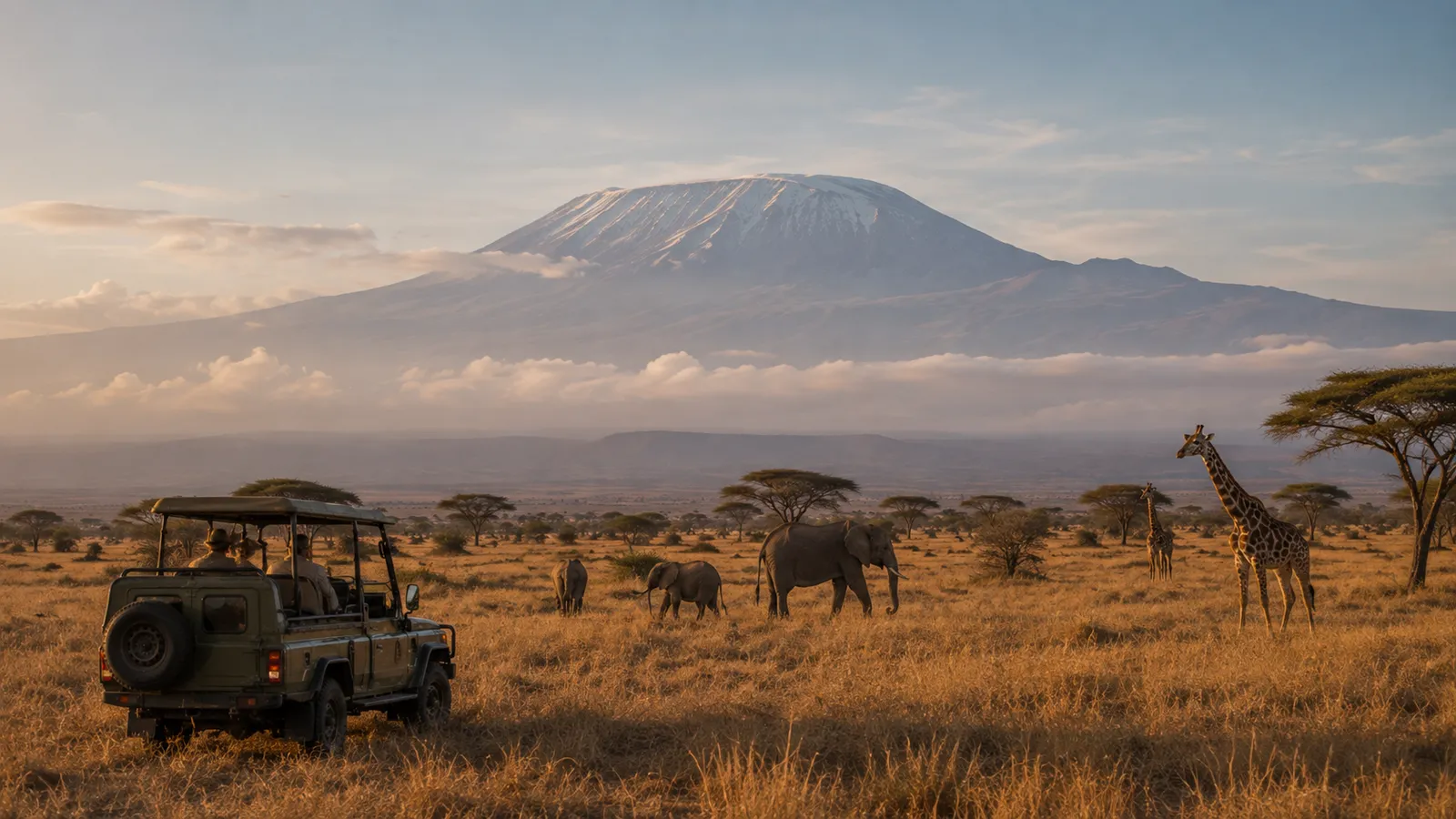
- Anyone combining the mountain with a safari afterwards
Not for
- Travellers who have not trained — altitude punishes arriving unprepared
- Anyone whose available days force a route with too little acclimatisation
- Travellers wanting a comfortable holiday; this is six days of walking and a hard night
- Anyone shopping for the fastest or cheapest summit
Straight answer
Altitude decides this, not fitness.
Most Kilimanjaro routes are treks rather than technical climbs. What turns people back is almost never the terrain — it is how their body handles thin air, and how many days they gave it to adjust.
That is why we would rather sell you a longer route than a cheaper one, and why we will tell you plainly if the days you have available are not enough for the ascent you have in mind.
Day by day
The shape of the climb
Day 1
Arrival, beneath the mountain
Met by your Highland team near Kilimanjaro. Kit is checked properly rather than glanced at, the route and the days ahead are walked through, and then you rest. Almost every problem higher up is easier to solve at this altitude.
Signature momentSeeing the mountain from below, knowing you are walking up it tomorrow.
Day 2
Into the rainforest
The mountain begins quietly. The first hours pass through dense rainforest — vegetation and birdlife found nowhere else on the route — and the change is quick. The road noise stops. The mountain becomes the only thing you are doing.
Signature momentThe last sound of the gate behind you, and then only forest.
Day 3
Above the trees
Forest gives way to open moorland and the views lengthen. The summit stops being an idea and becomes a shape ahead of you. The pace stays deliberately controlled — altitude is managed here, not fixed later.
Signature momentThe first time the summit is visible from the trail.
Day 4
Into the alpine zone
The landscape turns volcanic and increasingly severe: lava formations, high desert, thinning air. The mountain feels considerably larger from inside it than it does from the plain.
Signature momentStanding on old lava with the plains a very long way below.
Day 5
Acclimatisation and preparation
A deliberately quieter day. Height gained slowly, hydration, food, sleep, and a proper briefing for the summit night. The object is not to arrive at the summit push tired from getting there.
Signature momentA slow day that everyone underestimates and everyone is grateful for.
Day 6
Summit day
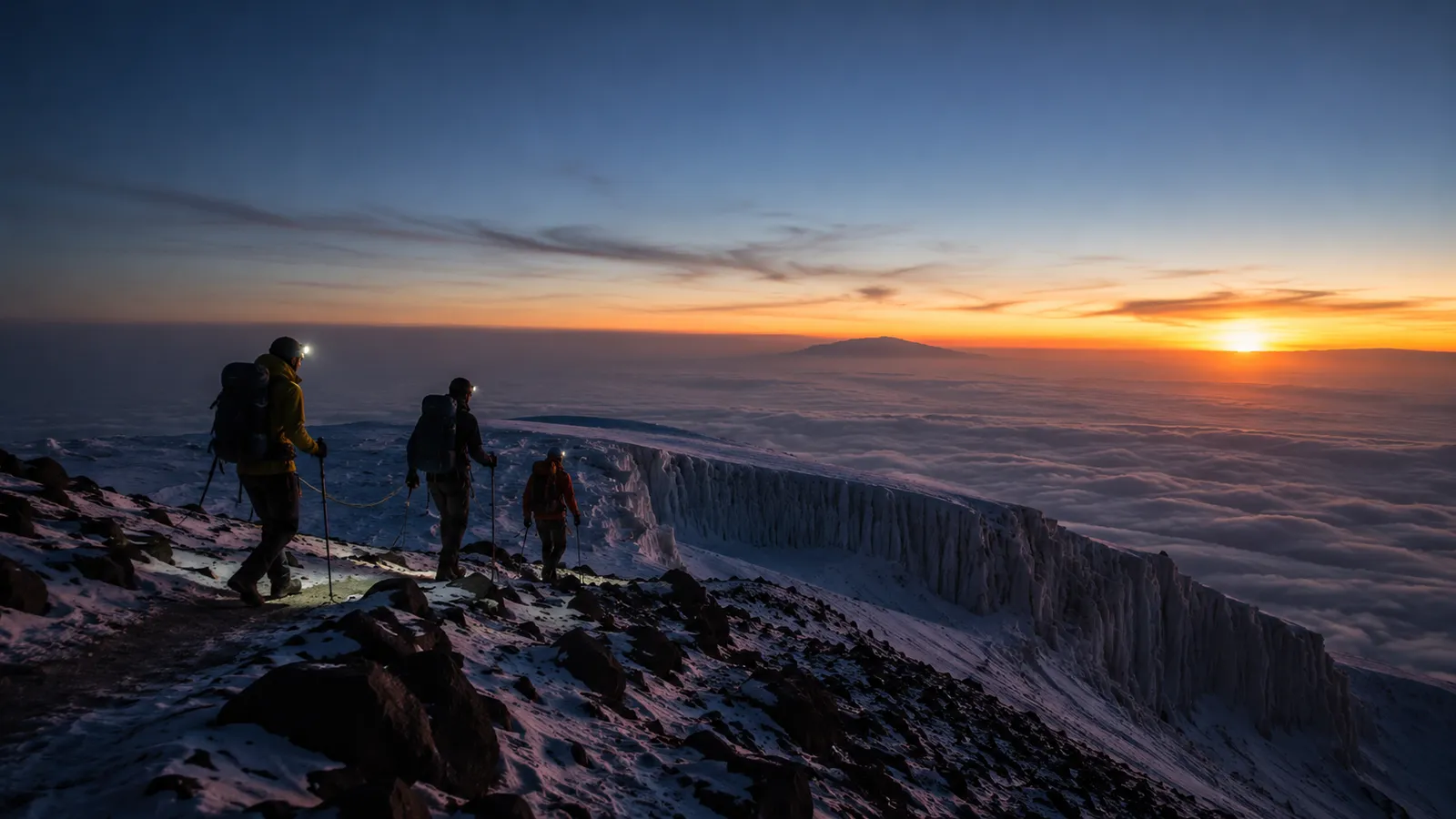
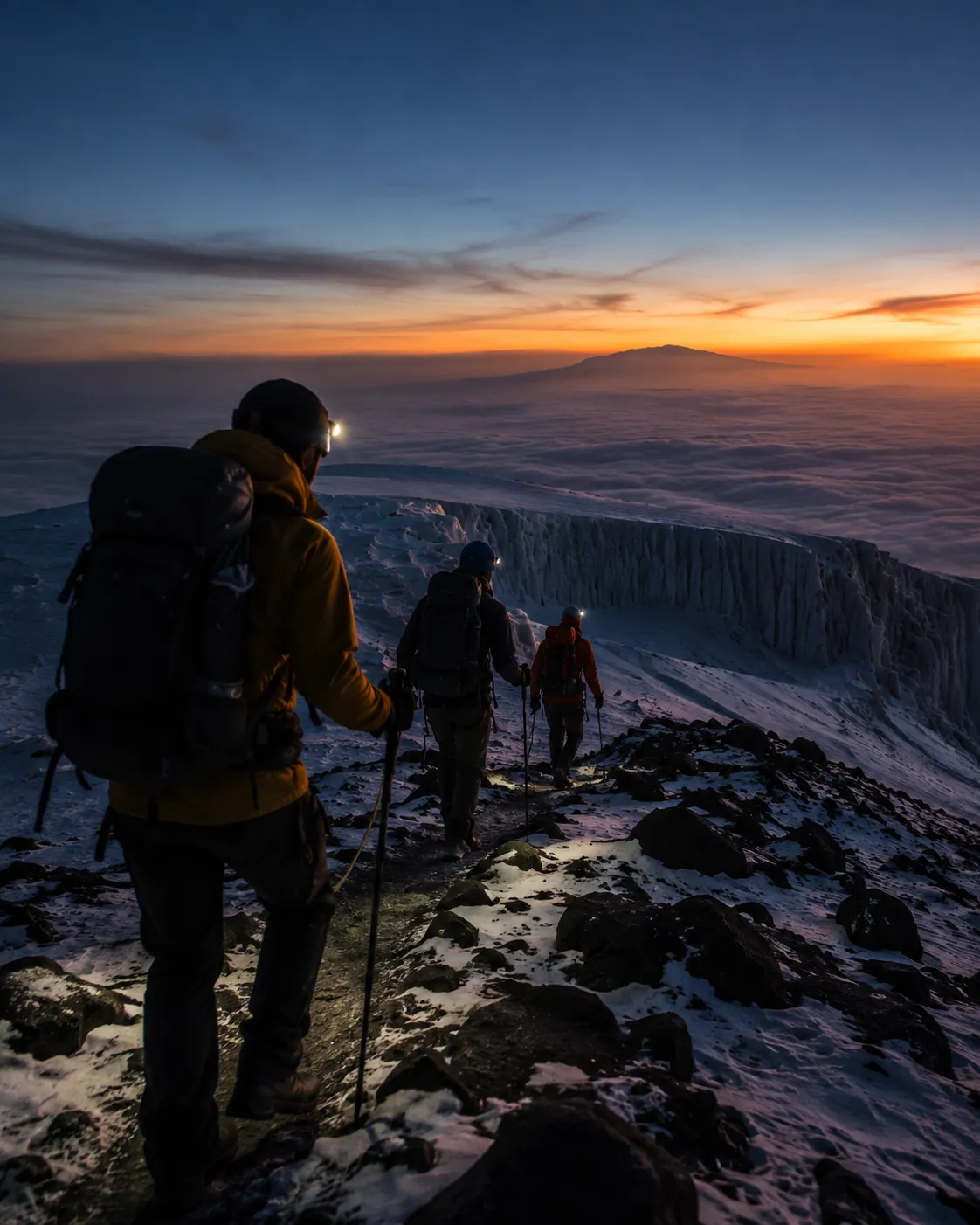
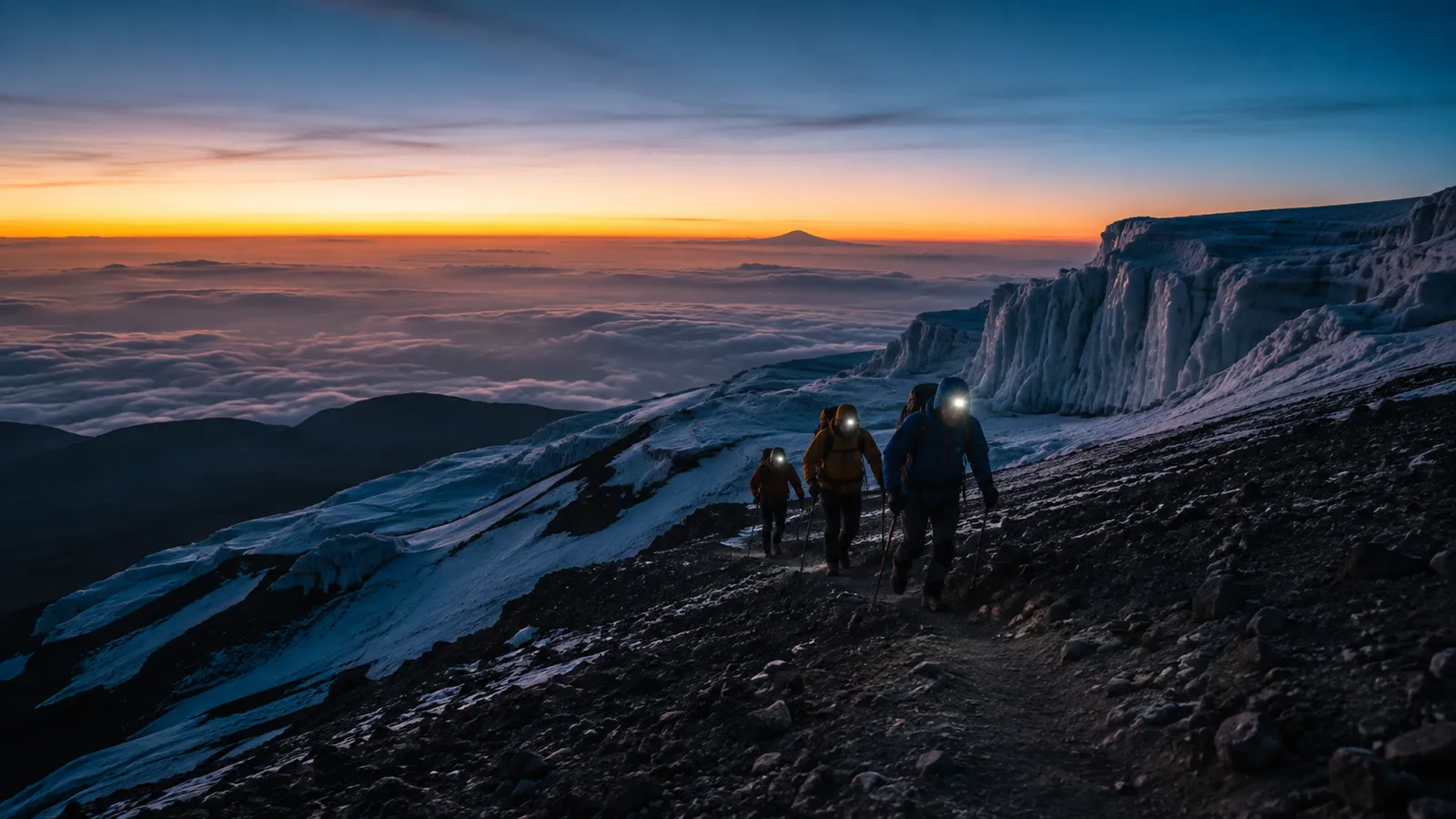
The hardest and the best of it. A start well before dawn, moving slowly and steadily in the dark. The sky changes long before the summit does. Then Uhuru Peak — at 5,895 metres, the highest point in Africa — reached by preparation and patience rather than by pushing.
Signature momentSunrise arriving somewhere below you, on the way up.
Days 7–9
Descent, and what it looks like going down
The way down runs back through every ecosystem you climbed, in reverse and at speed, which is when most people finally take in what they have done. Depending on the route and the days chosen, the descent runs across the final stages of the journey.
Kilimanjaro offers several routes, and the right one depends on your fitness, the days you have and how much acclimatisation you want built in. Machame is known for its scenery, Lemosho for a quieter approach and better acclimatisation, the Northern Circuit for the most gradual adjustment of all. We will recommend one for you rather than sell the same route to everybody — and the day count above shifts with that choice.
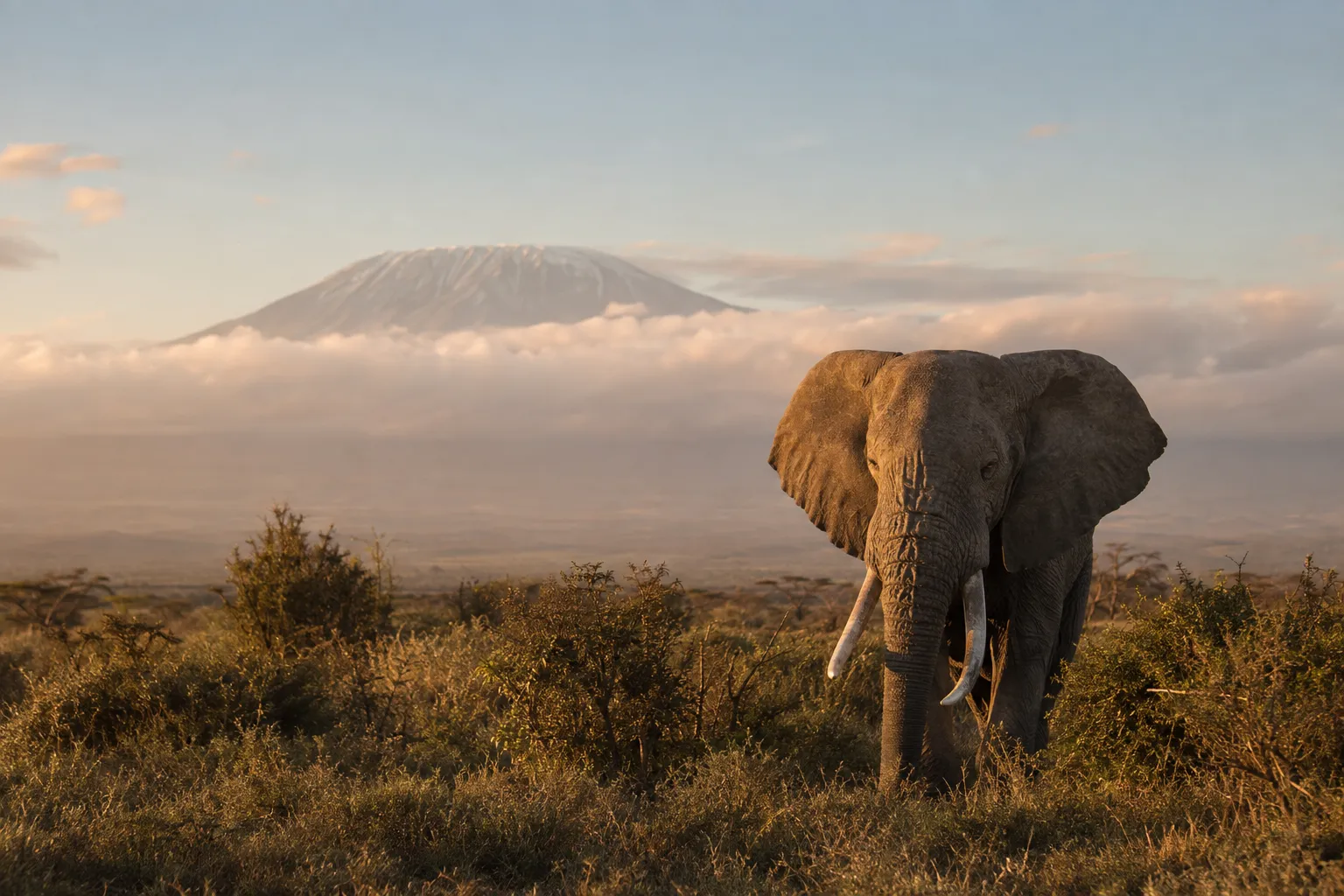
Tanzania, on the routes we run.
Included
- Professional mountain guides and full support crew
- Kilimanjaro National Park fees and camping or hut fees as applicable to the route
- Meals on the mountain and drinking water throughout the climb
- Group camping equipment as set out in your written itinerary
- Arrival and departure transfers, and transfers to and from the gate
- Daily health monitoring on the mountain
Not included
- International flights
- Tanzanian visa and any entry requirements
- Travel insurance including altitude and evacuation cover, which we require
- Personal trekking equipment and clothing, and any hire of it
- Gratuities for the mountain crew
- Accommodation before and after the climb unless stated in your itinerary
Nothing compulsory gets added later. If a cost appears after quoting, it is because you asked for it.
In the design
What the journey is built around
- A route recommended for you, with the reasoning explained
- Professional mountain guiding and full crew support
- Pacing set by acclimatisation rather than by the itinerary
- Daily health and altitude monitoring
- Pre-climb briefing and equipment check
- A safari extension afterwards, where you want one
Subject to season and to how you want the journey paced — your written itinerary is the version that counts.
Why this shape
Because the mountain is not a race
Kilimanjaro rewards patience in a way that is almost mathematical: more days, more acclimatisation, more chance of standing on the top and enjoying it when you get there.
Every part of this is built on that — route selection, the slow day nobody thinks they need, and a crew whose job is to keep you walking slowly enough to finish.
Questions
Before you ask us
- Is Kilimanjaro technical climbing?
- On most routes, no — they are treks rather than technical mountaineering. What makes it serious is altitude, and that is a question of preparation and pacing rather than of climbing skill.
- How fit do I need to be?
- Fit enough to walk for several hours a day, several days running, and to keep doing it on less oxygen. Good preparation does not just improve your chances — it changes how much of the mountain you actually enjoy.
- Which route will we climb?
- The one that suits you. We will talk through fitness, the days you have and how much acclimatisation you want, then recommend a route and explain why. We would rather do that than have a house route we sell to everyone.
- Can we add a safari?
- Yes, and it is the most common way this journey is booked — the mountain first, the plains afterwards, which is the right order for recovery.
The difference
What that actually means in practice
- The route is chosen for you, not sold to you
- We operate all the major routes, so there is no commercial reason to push one. The recommendation follows your fitness, your days and how much acclimatisation you want.
- Pacing is set by adaptation, not ambition
- We do not design summit attempts around speed. Height is gained gradually, the slow day stays in, and guides monitor how you are handling altitude daily rather than at the top.
- Porter welfare is part of the operation
- Load limits, pay, food and shelter for the crew are standards we hold rather than a line in a brochure. Ask your planner and they will tell you exactly what they are.
Design decisions
How we built this journey
- We would rather sell you a longer route than a cheaper one
- Almost nobody turns back because of terrain. They turn back because they gave their body too few days, and that is a decision made at booking.
- A dedicated acclimatisation day
- It is the day everyone thinks they can skip and the one that most changes whether summit night is survivable or enjoyable.
- Safari afterwards, never before
- Recovery belongs after the effort, and nobody willingly leaves a good safari to start a climb.
The standards behind it
What protects the experience
Where you stay
Mountain accommodation is what the route allows: camps on most routes, huts on Marangu. What we control is the standard of the camp and the crew running it, not the architecture.
We do not publish a property list, because the right camp depends on your month, your route and your party. Your written proposal names the camps we recommend, the room category and why each was chosen — how we choose them.
Guided by Tanzania knowledge
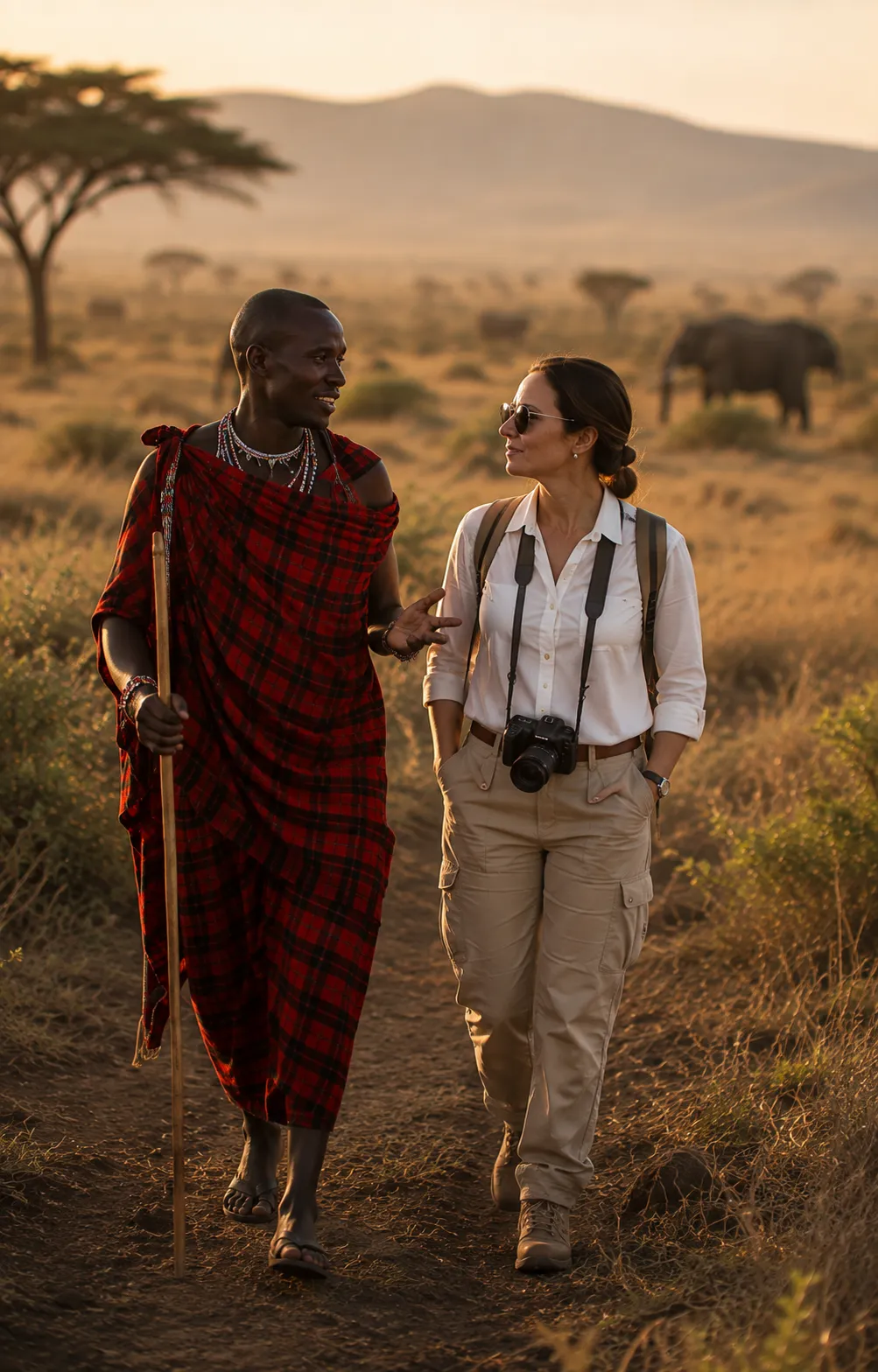
Mountain guides rather than safari guides — trained in altitude awareness, pacing and emergency response, and willing to hold you back on day three so you have something left on day six.
We match a guide to the journey rather than assign one to the booking — the Highland guiding standard.
On the mountain
- Route recommended for your fitness, your days and your acclimatisation needs
- Pacing set by adaptation rather than by the schedule
- Daily monitoring of altitude effects, hydration, fatigue and weather
- Communication systems, evacuation planning and first-aid readiness
- Porter welfare standards: ethical treatment, proper equipment, fair working conditions
Investment
What this journey usually costs, and why it moves
Private Reserve · $9,000–$16,000+ per guest
Greater privacy, strategic aviation, stronger camp positions and specialist experiences where they materially improve the journey.
- Travel month
- Migration periods, festive dates and the northern high season carry stronger demand. Shoulder and green seasons can materially reduce the price.
- Accommodation
- The largest single lever. Property, room category, meal and drink basis all change the real operating cost.
- Route and pace
- More nights in fewer places may improve the journey; remote regions cost more to reach and supply.
- Domestic aviation
- Scheduled flights and charters can buy back whole days. They are included only where the product page and confirmed proposal say so.
- Party and rooming
- Vehicle, guide and fixed logistics are divided across the party. Solo travel, single rooms, family rooms and exclusive use change the per-person figure.
- Special experiences
- Balloon flights, private dining, specialist vehicles, walking, boating and marine days are costed when they are genuinely part of the design.
A journey-level planning band, not a quote. The written proposal carries the real number for your dates, rooming, camps, fees, aviation and included experiences.
Yours, not ours
How this changes for you
- Machame — the scenic classic, 6–7 days on the mountain, steeper in sections
- Lemosho — our usual recommendation: quieter approach, better acclimatisation, 7–8 days
- Northern Circuit — the longest and most gradual, 8–9 days, best for first-time altitude
- Rongai — the quiet northern approach, different scenery, fewer people
- Marangu — the traditional route; shorter, and we will be straight that it allows less acclimatisation
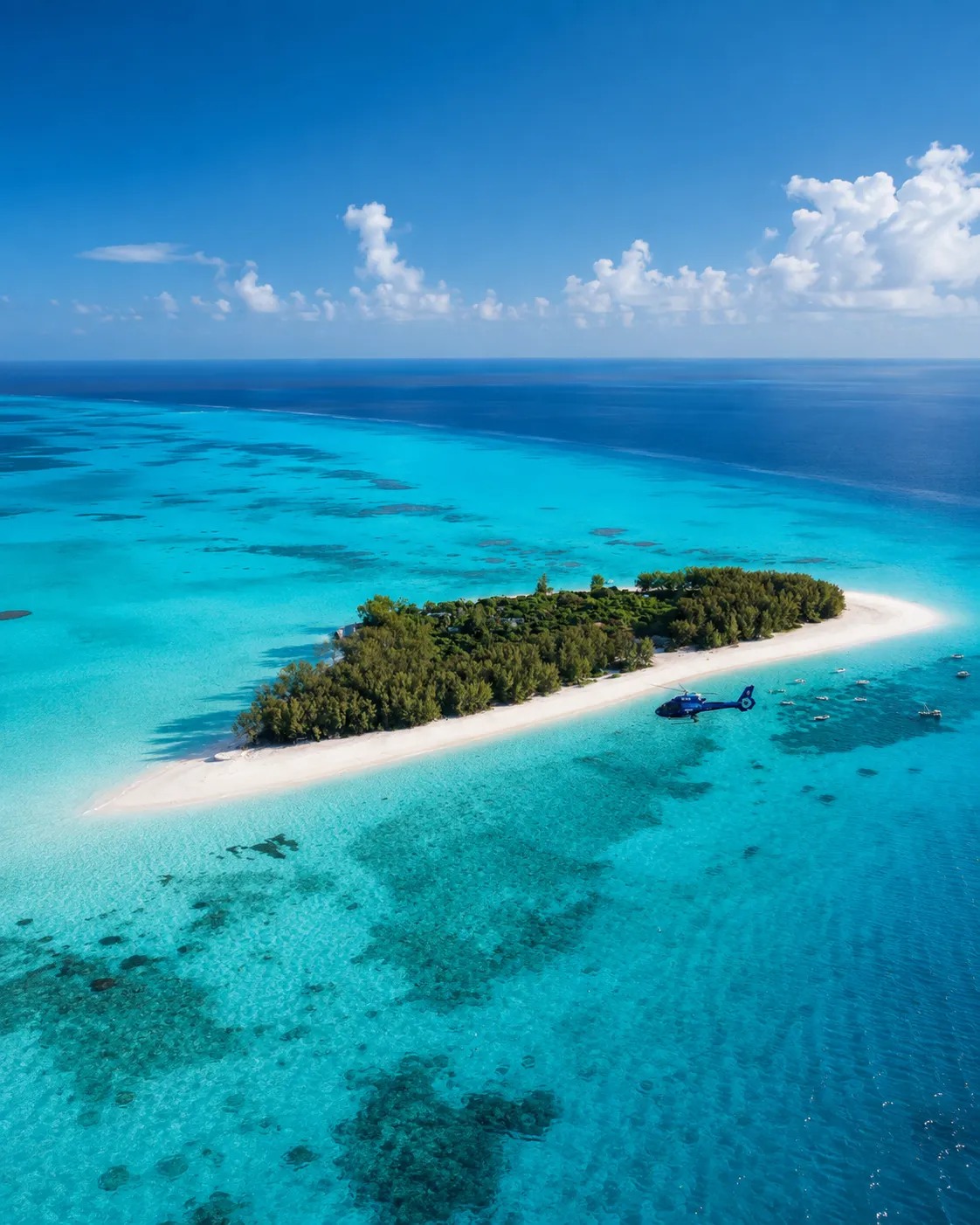
- A safari or Zanzibar extension afterwards, which most climbers add
Where this journey goes
Read about the places first
Related journeys
If this one is not quite it
Design your Tanzania journey
Tell us what you imagine — the month, who is travelling and the kind of Tanzania you have in mind. Our planners shape the route, the pace and the experiences around you, and a costed day-by-day plan with named camps comes back within 48 hours.
Begin your private journeySpeak with a Tanzania specialist