



8–12 days · Private · Rift lakes to forest
Birding & Wildlife Discovery
The country underneath the famous one.
Tanzania read through its habitats rather than its headline animals — soda lakes, groundwater forest, acacia woodland, highland cloud forest — with a specialist guide and days built around light and patience.
Length
8 to 12 days
Habitats
Lakes, forest, woodland, plains
Guiding
Specialist, not general safari
Pace
Slow, on purpose
Keep this route
The thinking
Tanzania is a habitat country before it is an animal country
The reason this country holds the wildlife it does is that it stacks an unusual number of habitats close together: alkaline lakes, groundwater forest, acacia woodland, grassland, highland forest and coast, within a few hours of each other.
Birds make that legible in a way large mammals do not. Move from a soda lake to a forest to open plains in three days and the changes are obvious, immediate and countable.
So this journey is built around habitat rather than around parks, and the day is built around light and patience rather than around ground covered. Mammals turn up throughout, because they live in the same places.
Best for
- Birders, from serious listers to people who have recently started noticing
- Photographers who want small subjects and difficult light
- Travellers who prefer understanding an ecosystem to collecting a checklist
- Anyone who has done a classic safari and found the best hour was the quiet one
Not for
- Travellers whose priority is the big five — the pace will frustrate you
- Anyone who wants to cover maximum ground in minimum days
- Parties split between a birder and someone who is not; that needs a different design
Straight answer
This is a slow journey, and the guide is the product.
Days are longer at the start and the end and quieter in the middle, and a good deal of the time is spent stationary. If somebody in your party would rather be looking for cats, they will have a worse trip than you.
The quality of this journey rests almost entirely on the guide. A general safari guide who is good with birds is not the same as a birding specialist, and we will not pretend otherwise — the specialist is what you are paying for and it is arranged specifically.
We do not publish species counts or promise particular birds. Habitats are reliable; individual species are not, and the season moves them.
Day by day
Eight to twelve days, habitat by habitat
Days 1–2
The Rift lakes
Starting on the lakes at the bottom of the Rift, where alkaline water produces its own strange ecology — waders, flamingos where conditions suit them, raptors along the escarpment. It is the fastest way to understand why this country works the way it does.
Signature momentStanding on the escarpment and seeing three habitats at once.
Days 3–4
Groundwater forest and woodland
Into forest fed from below rather than by rain, which produces a canopy that has no business being where it is. Different birds entirely, most of them heard before they are seen, and a guide working almost entirely on call.
Signature momentA bird identified by sound alone, then found.
Days 5–6
Baobab and acacia country
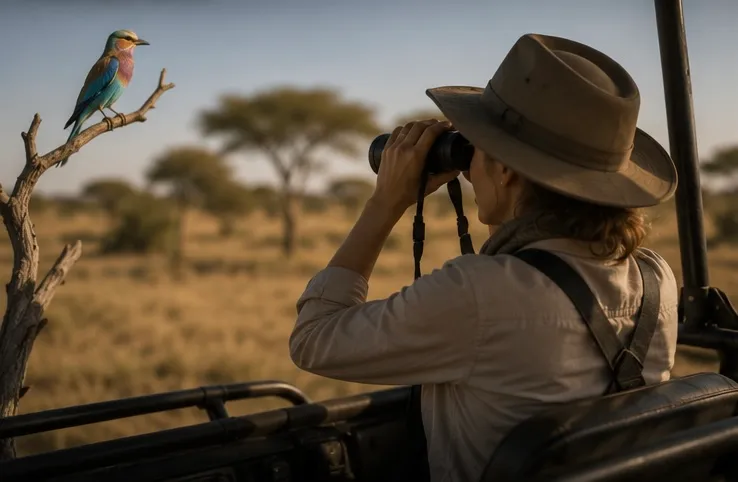
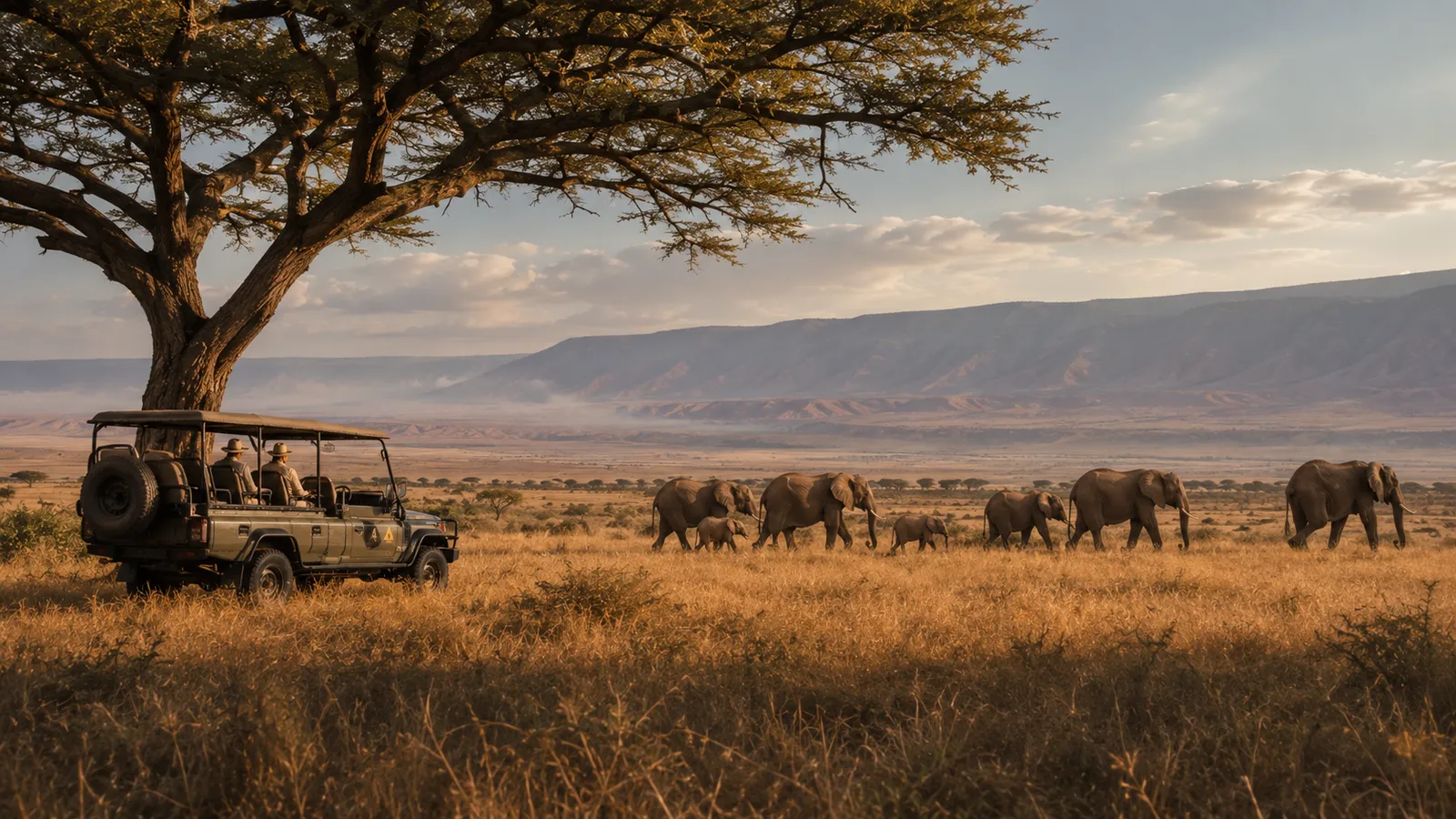
Open woodland with a river through it: hornbills, rollers, bee-eaters, and raptors working the thermals over the escarpment in the middle of the day. The elephants are also here, and nobody objects.
Signature momentA bee-eater colony in a riverbank, worked properly rather than glanced at.
Days 7–8
The crater highlands
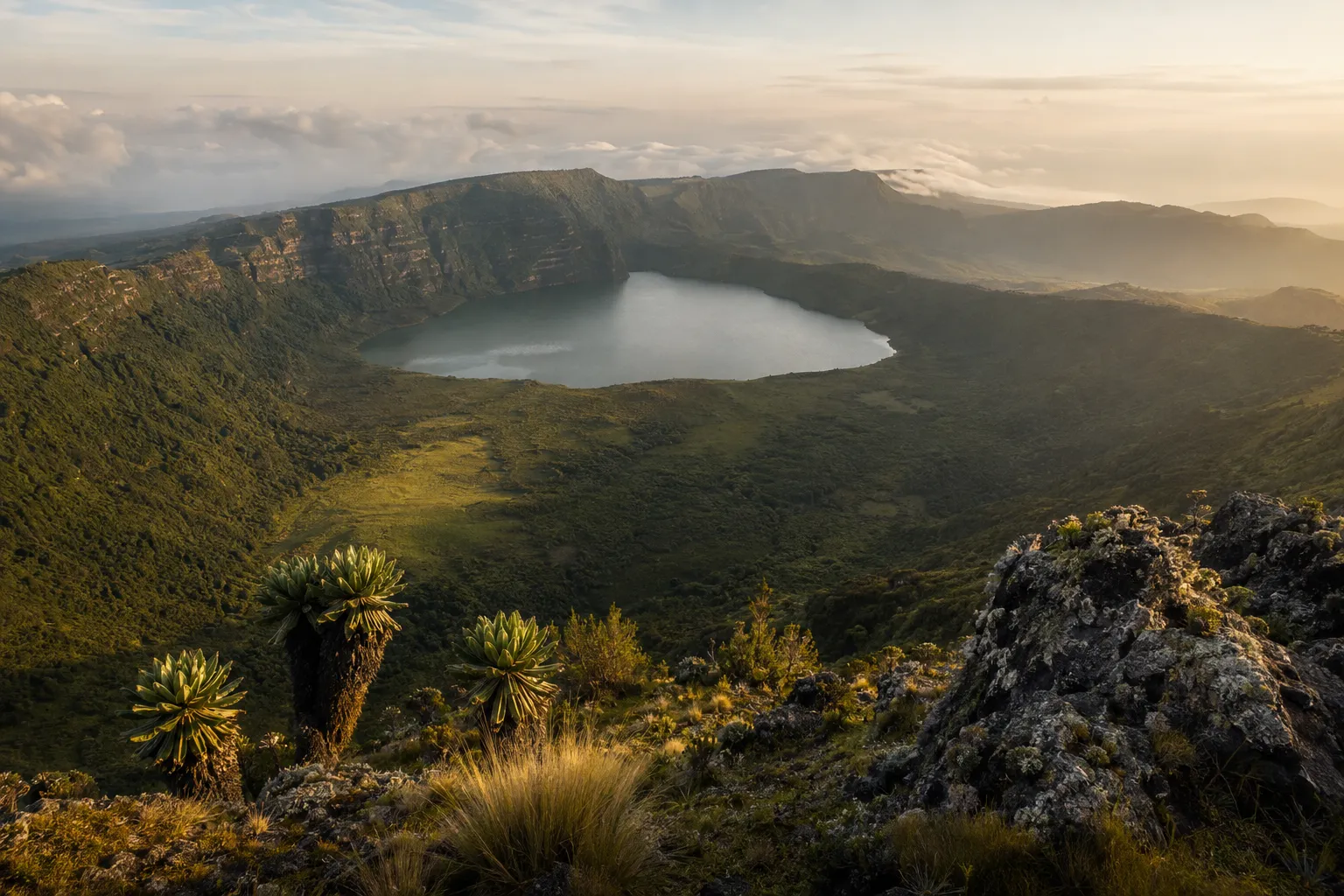
Up into montane country, where the altitude changes the list again. Highland forest species, and a day on the crater floor where the wetland and the grassland hold completely different birds within a few hundred metres of each other.
Signature momentCrater floor wetland at first light, before the vehicles arrive.
Days 9–12
The plains, and whatever the season is doing
Out onto grassland, which looks empty and is not: larks, pipits, coursers, bustards and the raptors that live off them. The last days flex around the season and around what your list is missing.
Signature momentGrassland birding, which is the discipline that separates people who like birds from birders.
The green months are the strongest for birding — migrants are in and many residents are breeding — which makes this one of the few journeys where we will actively recommend the season most operators discount. Which habitats and in what order depends on your dates and on what you have already seen.
Tanzania, on the routes we run.
Included
- A specialist birding guide for the journey
- Private vehicle throughout, never shared
- Park, forest and conservation fees for the areas on the route
- Accommodation and meals on the basis set out in your written itinerary
- Internal transfers on the route
Not included
- International flights
- Tanzanian visa and any entry requirements
- Travel and medical insurance, which we require
- Optical and photographic equipment
- Personal spending and gratuities
Nothing compulsory gets added later. If a cost appears after quoting, it is because you asked for it.
In the design
What the journey is built around
- A specialist birding guide, arranged for the journey
- Your own vehicle, never shared, with the freedom to stop and stay stopped
- A route built around habitats rather than around famous parks
- Long first and last hours, and unhurried middles
- Accommodation and meals on the basis set out in your written itinerary
Subject to season and to how you want the journey paced — your written itinerary is the version that counts.
Why this shape
Because the checklist safari has a ceiling
Guests who have seen the big five twice start asking a different question, and it is usually some version of "what else is here". Birds are the most complete answer, because they are everywhere and they change every time the ground does.
We built it around habitat and around a specialist guide because those are the two things that make the difference. Everything else on this journey is ordinary safari logistics.
Questions
Before you ask us
- Do I need to be a serious birder?
- No. The journey works for anyone who would rather understand a place than tick it off. It works badly for someone who wants to cover ground.
- How many species will we see?
- We do not publish a number, because it depends on the season, the habitats and how hard you want to work. Your guide will keep the list; we would rather it were honest than impressive.
- When is the best time?
- The green months, when the migrants are in and residents are breeding. That is the opposite of the standard safari recommendation and it is the right answer for this journey.
- Can a non-birder come?
- Yes, but tell us at the enquiry so we design for it. A journey built for one birder and one reluctant passenger is a different itinerary from this one.
The difference
What that actually means in practice
- A birding guide, not a safari guide who likes birds
- Call recognition and habitat reading are separate skills, and the difference over ten days is enormous. We arrange the specialist rather than hoping the roster obliges.
- Habitat-led routing
- Built around lakes, forest, woodland and grassland rather than around the parks with the best mammal reputations. The list follows the habitat, not the brochure.
- No species promised, no counts published
- Habitats are reliable and individual birds are not. A journey that guarantees a species is guaranteeing something it does not control.
Design decisions
How we built this journey
- Recommended in the green months
- Migrants are present and residents are in breeding plumage. It is the one journey where the season everyone discounts is the season we would actually choose.
- Fewer places, longer stays
- Birding a habitat properly takes days, not a morning. Adding a park would add driving and subtract birds.
The standards behind it
What protects the experience
Where you stay
Chosen for habitat first: somewhere you can bird from the veranda before breakfast is worth more on this journey than a larger room an hour from the forest. Quiet also matters more here than on any other route.
We do not publish a property list, because the right camp depends on your month, your route and your party. Your written proposal names the camps we recommend, the room category and why each was chosen — how we choose them.
Guided by Tanzania knowledge
A specialist birding guide, which is a genuinely different skill from safari guiding — call recognition, habitat reading, and the patience to sit with a difficult bird rather than move on to an easy mammal.
We match a guide to the journey rather than assign one to the booking — the Highland guiding standard.
On safari
- Your own vehicle and guide, never shared with another party
- Responsible viewing distances, and a guide who will refuse a closer approach
- Guides experienced in the specific parks on your route, in the season you travel
- Emergency procedures briefed before you travel, not improvised on the day
- A named planner before you go and a duty phone answered in Moshi while you are away
Investment
What this journey usually costs, and why it moves
Signature Private to Private Reserve · $5,000–$9,000 per guest to $9,000–$16,000+ per guest
Private road and short-haul journeys through Tanzania’s iconic wildlife landscapes, with strong guiding and intelligent pacing.
Greater privacy, strategic aviation, stronger camp positions and specialist experiences where they materially improve the journey.
- Travel month
- Migration periods, festive dates and the northern high season carry stronger demand. Shoulder and green seasons can materially reduce the price.
- Accommodation
- The largest single lever. Property, room category, meal and drink basis all change the real operating cost.
- Route and pace
- More nights in fewer places may improve the journey; remote regions cost more to reach and supply.
- Domestic aviation
- Scheduled flights and charters can buy back whole days. They are included only where the product page and confirmed proposal say so.
- Party and rooming
- Vehicle, guide and fixed logistics are divided across the party. Solo travel, single rooms, family rooms and exclusive use change the per-person figure.
- Special experiences
- Balloon flights, private dining, specialist vehicles, walking, boating and marine days are costed when they are genuinely part of the design.
A journey-level planning band, not a quote. The written proposal carries the real number for your dates, rooming, camps, fees, aviation and included experiences.
Yours, not ours
How this changes for you
- Extended into the Usambaras for Eastern Arc endemics, which is the serious version
- Combined with a coastal chapter for shorebirds and mangrove species
- Built as a mixed-interest journey where one traveller is birding and one is not
- Photography-weighted, with hides and longer stationary time where available
Where this journey goes
Read about the places first
- Tarangire National ParkBaobab country with a river through it — the elephant park of the northern circuit, and the one most itineraries give too little time to.
- The Ngorongoro CraterA collapsed volcano holding a self-contained ecosystem on its floor — the densest concentration of large mammals in Tanzania, and the busiest.
- The SerengetiThe plains that most people mean when they say safari — and a park large enough that where you stay in it matters more than whether you go.
Related journeys
If this one is not quite it
Design your Tanzania journey
Tell us what you imagine — the month, who is travelling and the kind of Tanzania you have in mind. Our planners shape the route, the pace and the experiences around you, and a costed day-by-day plan with named camps comes back within 48 hours.
Begin your private journeySpeak with a Tanzania specialist