



Ruaha & Nyerere
Southern Tanzania
Rivers, walking country and vast areas with almost nobody in them — the answer for travellers who have done the north and started to mind the traffic.
What it is
Southern Tanzania in plain terms
The southern parks — principally Ruaha and Nyerere, the latter carved out of what was long called the Selous — are enormous, and they receive a small fraction of the visitors the northern circuit does.
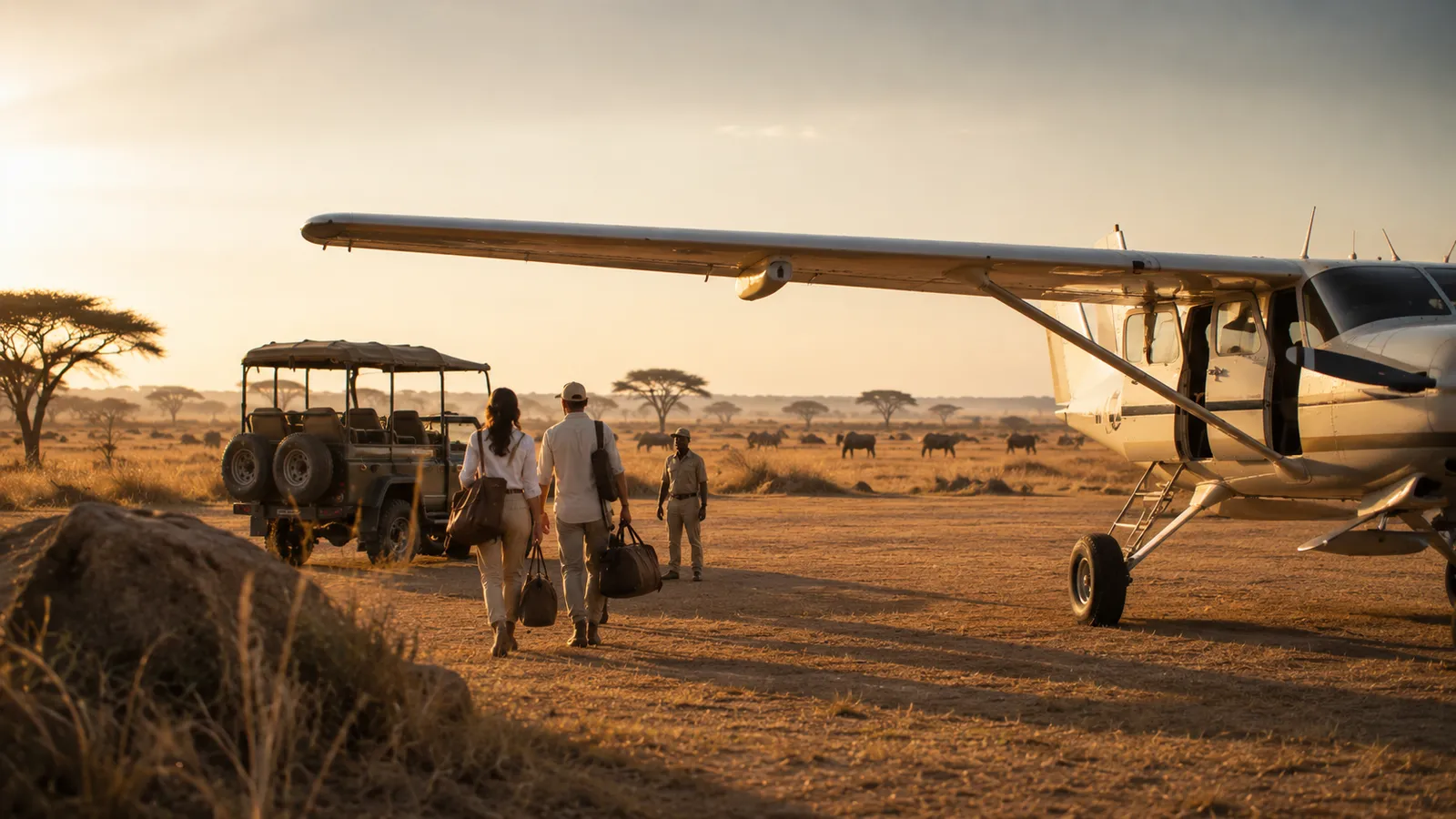
The trade is straightforward. You fly rather than drive, the camps are generally simpler, the game is less concentrated than the crater and less iconic than the Serengeti plains, and in exchange you get scale and quiet that the north cannot offer at any price.
The south also offers two things the northern parks largely do not: walking safaris, where the licensing allows, and boat safaris on the rivers. Both change the relationship with the landscape completely.
Why come here
What The south does that nowhere else does
- Very few vehicles
- This is the most common complaint about the famous parks and the south is the honest answer to it. Sightings here are usually yours alone.
- On foot and on the water
- Walking, where it is permitted, and boat safaris on the rivers give a completely different sense of scale from a vehicle. Neither is widely available in the north.
- Different country, different animals
- Miombo woodland, baobabs and big rivers rather than open plain. Sable and roan are here, wild dog are a genuine possibility, and Ruaha holds very large lion prides.
- It combines with the coast, not the mountain
- The south connects naturally to Dar es Salaam and the coast, which makes it an easy pairing with Zanzibar or Mafia rather than with Kilimanjaro.
When to go
A dry-season proposition, and firmly so
The southern parks concentrate around water in the dry months, which is when the game viewing justifies the flights. Some camps close entirely in the wettest part of the year, and access becomes genuinely difficult.
If your dates fall in the wet season and the south is what you have set your heart on, we will tell you that before you book rather than after. It is one of the few places where the season decides whether the journey is worth taking at all.
See what each month gives you across Tanzania →Wildlife
What you are likely to see
- Lion, including the very large prides Ruaha is known for
- Elephant and buffalo in significant numbers along the rivers
- Wild dog, which are rare everywhere and a real possibility here
- Sable and roan antelope, which the northern parks essentially do not have
- Hippo and crocodile in concentrations along the water
- Giraffe, zebra, kudu and a long list of plains and woodland game
Likely, never promised. These are wild animals in very large areas, and an operator who guarantees a species is guaranteeing something that is not theirs to give.
How long
Four nights, and preferably in one park
The flying is the cost of coming south, so it only makes sense across enough nights to amortise it. Four in a single park beats two and two, and if you are combining Ruaha and Nyerere, six or seven is the honest minimum. Guests with less time are usually better served by the north.
Getting here
- By air from Dar es Salaam, which is the usual approach and the reason the south pairs with the coast
- By air from Arusha or the northern circuit, where a trip is combining both halves of the country
- Overland, which is possible, long, and rarely the right use of a holiday
Be honest with yourself
Who The south suits badly
- A first safari — the northern circuit does considerably more for you for considerably less flying
- Green-season travellers; this is a dry-season region and some camps close entirely
- Guests expecting northern-circuit camp comfort as standard
- Short trips, where the flights eat the time you came for
Journeys that go here
How we build The south into a trip
Common questions
The south, answered plainly
- Is southern Tanzania better than the northern circuit?
- Not better — different, and not a first safari. Fewer vehicles, more walking and boat work, bigger country; less variety, more flying and simpler camps. It is a superb second or third trip.
- What is the difference between Nyerere and the Selous?
- Nyerere National Park was created from the northern part of what was long known as the Selous Game Reserve. You will see both names used, often for overlapping areas.
- When should I visit the southern parks?
- The dry months, without much qualification. Game concentrates around the rivers then, and access is reliable. Some camps close in the wettest part of the year.
- Can you walk on safari in southern Tanzania?
- Where it is permitted and conditions allow, yes — and it is one of the main reasons to come south. Availability varies by area and by day, and your guide makes that call on the ground.